Unlimited Data $50/mo for a Limited Time
Includes HD video & 10GB hotspot data The cheapest deal for unlimited data from all major carriers
 No Phone Selected




Mobile Select Plan
- Available on 1 Major 5G Nationwide network in select areas with compatible devices
- 15GB high-speed mobile hotspot
- Unlimited international calling to Canada, Mexico and 215+ destinations
- HD streaming
- Access to the most WiFi hotspots nationwide (16M)
- Deal: Get a FREE 1 year of Xfinity Mobile Select Plan with Xfinity Internet required
Regular rate of $30/mo. thereafter

Unlimited Data Plan
- Available on 1 Major 5G Nationwide network in select areas with compatible devices
- Mobile hotspot included
- International add-ons available
- SD streaming
- Deal: Get this Unlimited Plan for Free for one year of service with Internet required

Unlimited Plan
- Available on 3 Major 5G Nationwide network in select areas with compatible devices
- Mobile hotspot NOT included
- International add-ons available
- $25/month lock-in price
- Deal: Get this Unlimited plan for only $10/mo. for the first 3 months of service with Boost Mobile!


Unlimited Plus Plan
- T-Mobile 5G Network in select areas with compatible devices
- 15GB mobile hotspot
- Unlimited international calling & texting to 100 countries
- FREE SIM card + FREE shipping
- Deal: Get this plan for only $12.50/mo. or 74% off for the first 9 months of service. Auto-renewal enrollment required.
Regular rate is $49/month

3-Month Unlimited Plan
- Available on 1 Major 5G Nationwide network in select areas with compatible devices
- Mobile hotspot NOT included
- Unlimited international calling & texting to/from Canada & Mexico
- Data coverage in Canada & Mexico
- 2GB cloud storage using myPhotoVault app or web portal
- Deal: Get this plan for only $45 for the first 3 months or $15/mo.
regular rate for 3 months is $120 (equals to $40/month)

Unlimited Data Plan
- T-Mobile 5G Network in select areas with compatible devices
- 20GB mobile hotspot
- Unlimited international calling to Canada, Mexico, & the United Kingdom
- SD streaming
- Wi-Fi calling & texting
- Deal: Get this unlimited plan for just $15/mo. (applicable for 3, 6 or up to 12 months of service)
Mobile Plus Plan
- Available on 1 Major 5G Nationwide network in select areas with compatible devices
- 50GB high-speed mobile hotspot
- Unlimited international calling to Canada, Mexico and 215+ destinations
- 4K UHD streaming
- Access to the most WiFi hotspots nationwide (16M)
- Deal: Get this plan for only $15/mo. for the first year of service. Xfinity internet required.
Regular rate of $45/mo. thereafter

Unlimited Data w/ 2GB Hotspot Plan
- AT&T 5G Network in select areas with compatible devices
- 2GB mobile hotspot
- International Calling and Roaming credit Add-ons available
- Up to 20% off when adding more lines
- Deal: Get this plan for only $15/mo. for the first 3 months of service with new line activation. Plan renews at standard pricing thereafter.
Unlimited Data w/ 10GB Hotspot Plan
- AT&T 5G Network in select areas with compatible devices
- 10GB mobile hotspot
- Unlimited international calling & texting to 100+ countries
- $10 international talk credit + $20 international roaming credit
- Up to 20% off when adding more lines
- Deal: Get this plan for only $15/mo. for the first 3 months of service with new line activation. Plan renews at standard pricing thereafter.
Unlimited Data w/ 20GB Hotspot Plan
- AT&T 5G Network in select areas with compatible devices
- 20GB mobile hotspot
- Unlimited international calling & texting to 100+ countries
- $15 international talk credit + $30 international roaming credit
- Up to 20% off when adding more lines
- Deal: Get this plan for only $15/mo. for the first 3 months of service with new line activation. Plan renews at standard pricing thereafter.
Unlimited Data w/ 30GB Hotspot Plan
- AT&T 5G Network in select areas with compatible devices
- 30GB mobile hotspot
- Unlimited international calling & texting to 100+ countries
- $20 international talk credit + $40 international roaming credit
- Up to 20% off when adding more lines
- Deal: Get this plan for only $15/mo. for the first 3 months of service with new line activation. Plan renews at standard pricing thereafter.

Unlimited 6-Month Plan (BYOD)
- T-Mobile 5G Network in select areas with compatible devices
- Mobile hotspot NOT included
- International add-ons available
- Deal: Get this plan for only $120 for six months of service or $20/mo.
(equivalent to $20/month)
Taxes and regulatory fees included.

Unlimited Data, Talk & Text 6-Month Plan
- Available on 2 Major 5G Nationwide networks in select areas
- Mobile hotspot NOT included
- Unlimited international calling to 60+ countries
- FREE SIM Kit + FREE Shipping
- Deal: Get this plan 50% off + Buy this Unlimited Data, Talk & Text 6-Month plan and get FREE 1GB Plan with Good2Go!
regular rate is $282 for 6 months (or $47/mo.)
Unlimited Data, Talk & Text 3-Month Plan
- Available on 2 Major 5G Nationwide networks in select areas
- Mobile hotspot NOT included
- Unlimited international calling to 60+ countries
- FREE SIM Kit + FREE Shipping
- Deal: Get this plan 50% off + Buy this Unlimited Data, Talk & Text 3-Month plan and get FREE 1GB Plan with Good2Go!
regular rate is $147 for 3 months (or $49/mo.)
Unlimited Data, Talk & Text 1-Month Plan
- Available on 2 Major 5G Nationwide networks in select areas
- Mobile hotspot NOT included
- Unlimited international calling to 60+ countries
- FREE SIM Kit + FREE Shipping
- Deal: Get this plan 50% off + Buy this Unlimited Data, Talk & Text 1-Month plan and get FREE 1GB Plan with Good2Go!
$25 Unlimited Plan (BYOD) | Online
- T-Mobile 5G Network in select areas with compatible devices
- Mobile hotspot NOT included
- International add-ons available
- Scam Shield & T-Mobile Tuesdays

Unlimited Text, Talk, and Data Plan
- T-Mobile 5G Network in select areas with compatible devices
- Unlimited Talk, Text, and 50GB of High-Speed data
- Reliable Nationwide 5G Coverage
- Free Wi-Fi Calling and 10GB Hotspot
- Year-round savings

Unlimited 25 Plan
- Available on 2 Major 5G Nationwide networks in select areas with compatible devices
- Mobile hotspot included
- Unlimited international texting
- FREE SIM card with phone purchase
- Deal: Get $15 off this plan with Ting internet required.

Unlimited Starter Plan
- Available on 3 Major 5G Nationwide networks in select areas and compatible devices
- 10GB mobile hotspot
- International add-ons available
- FREE SIM card with phone purchase
- 30 day risk-free trial
- whistleOut Exclusive: Get this plan for only $45 for 3 months ($15/mo.) with new number activation OR $5 off per month for 6 mo. (up to 3 lines) OR 30 Days FREE Trial
Unlimited Starter Plan (Dark Star)
- Available on 3 Major 5G Nationwide networks in select areas and compatible devices
- 20GB mobile hotspot
- International add-ons available
- SD streaming
- FREE SIM card with phone purchase
- 30 day risk-free trial
- whistleOut Exclusive: Get this plan for only $45 for 3 months ($15/mo.) with new number activation OR $5 off per month for 6 mo. (up to 3 lines) OR 30 Days FREE Trial

$25 Visible Plan
- Verizon 5G Network in select areas with compatible devices
- Unlimited mobile hotspot
- Unlimited international calling & texting to Canada & Mexico
- SD streaming
- 15 day free trial

Total MAX 5G BYO Plan
- Verizon 5G Nationwide in select areas with compatible devices
- Unlimited mobile hotspot
- Calls & Texts to 200+ countries
- Roaming in 30+ countries including Canada and Mexico
- 100GB cloud storage + Western Union money transfer

$25 StraightSAVINGS! Plan
- Available on 3 Major 5G Nationwide networks in select areas with compatible devices
- 10GB mobile hotspot
- International add-ons available
- Deal: Get $50 bonus device credit after 12 months of service when you port-in your number and bring your own device.

Prepaid Unlimited Talk, Text, and Data Plan
- AT&T 5G Network in select areas with compatible devices
- Unlimited texting to 230+ countries
- SD streaming
- No data overages

Unlimited Talk, Text and Data
- Verizon 5G Network in select areas with compatible devices
- Mobile hotspot included
- Unlimited international calling to 80+ countries
- FREE SIM card + FREE shipping
- 30 day risk-free trial
- Deal: New customers get this Unlimited plan for $25 a month for 3 months!

Premium Monthly Plan (CDMA)
- Verizon 5G Network in select areas with compatible devices
- 10GB mobile hotspot
-
Unlimited international calling to 80 countries
+ $10 international calling credit - Choose any major network
- Deal: Get 50% off your first month of service with this monthly plan. New customer only.
Premium Monthly Plan (GSMA)
- AT&T 5G Network in select areas with compatible devices
- 10GB mobile hotspot
-
Unlimited international calling to 80 countries & roaming to 60+ countries
+ $10 international calling credit - Choose any major network
- Deal: Get 50% off your first month of service with this monthly plan. New customer only.
Premium Monthly Plan (GSMT)
- T-Mobile 5G Network in select areas with compatible devices
- 10GB mobile hotspot
-
Unlimited international calling to 80 countries
+ $10 international calling credit - Choose any major network
- Deal: Get 50% off your first month of service with this monthly plan. New customer only.
$30 Unlimited Plan (BYOD) | Online
- T-Mobile 5G Network in select areas with compatible devices
- 10GB Mobile hotspot included
- International add-ons available
- Scam Shield & T-Mobile Tuesdays

Simplicity Plan
- Verizon 5G Network in select areas with compatible devices
- 10GB Mobile Hotspot
- Mexico & Canada Talk, Text and Data included
- 5G Ultra Wideband Premium Data

Unlimited Data
- Available on 1 Major 5G Network in select areas with compatible devices
- Mobile hotspot included
- Unlimited international texting to 190+ countries + 2000 minutes to Canada & Mexico
- DVD-quality streaming
$30 Visible+ Plan
- Verizon 5G Network in select areas with compatible devices
- Unlimited mobile hotspot
- Unlimited international calling & texting to Canada & Mexico
- HD streaming
- 15 day free trial
- Deal: Get $5/mo. off this Visible+ monthly plan for the first 12 months of service using promo code SUMMER

Unlimited 6-Month Plan
- T-Mobile 5G Network in select areas with compatible devices
- 10GB mobile hotspot
-
Unlimited international calling to 90+ countries
+ $10 international calling credit & $10 roaming credit - FREE 3-in-1 SIM card or eSIM
- Deal: Get 15% off on this plan with upfront payment required
Regular rate at $234 for 6 months or $39/month

Unlimited Essentials for 1
- T-Mobile 5G Network in select areas with compatible devices
- Mobile hotspot NOT included
- DVD-quality streaming
- Auto connects to best network
- 7 day FREE trial
Total STARTER Plan
- Verizon 5G Nationwide in select areas with compatible devices
- 10GB mobile hotspot
- Calls to 85+ countries & Texts to 200+ countries
- Roaming in Canada and Mexico
Prepaid Unlimited Saver℠ Plan
- AT&T 5G Network in select areas with compatible devices
- Unlimited texting to 230+ countries
- SD streaming
- No data overages
Select Unlimited Plan
- Available on 1 Major 5G Nationwide network in select areas with compatible devices
- Mobile hotspot NOT included
- Unlimited international calling & texting to/from Canada & Mexico
- SD streaming

Unlimited for Ages 50+ Plan
- Available on 2 Major 5G Nationwide networks in select areas with compatible devices
- Mobile hotspot included
- Unlimited international calling to Canada & Mexico
- Redeemable online or through call center
$35 Visible+ Pro Plan
- Verizon 5G Network in select areas with compatible devices
- Unlimited mobile hotspot
- Unlimited international calling to Canada & Mexico + unlimited international texting to 200+ countries
- 4K UHD streaming
- 15 day free trial
- Deal: Get $10/mo. off this Visible+ Pro monthly plan for the first 12 months of service using promo code SUMMER

Unlimited Month Pass Plan
- Network: T-Mobile
- Mobile hotspot NOT included
- Unlimited international calling & texting to/from Canada & Mexico
- Ad-Free+ bundle
- FREE sim card
Unlimited Premium Plan
- Available on 3 Major 5G Nationwide networks in select areas and compatible devices
- 50GB mobile hotspot
- Unlimited international calling to 180+ countries
- SD streaming
- FREE SIM card with phone purchase + FREE Network Transfer
- 30 day risk-free trial
- Deal: Get this monthly plan for only $39 for 6 months of service using promo code ONLY39 OR $5 off per month for 6 months OR 30 Days FREE Trial
Unlimited Premium Plan (Dark Star)
- Available on 3 Major 5G Nationwide networks in select areas and compatible devices
- 200GB high-speed mobile hotspot
- Unlimited international calling to 180+ countries
- HD streaming
- FREE SIM card with phone purchase + FREE Network Transfer
- 30 day risk-free trial
- Deal: Get this monthly plan for only $39 for 6 months of service using promo code ONLY39 OR $5 off per month for 6 months OR 30 Days FREE Trial
Unlimited+ 6-Month Plan
- T-Mobile 5G Network in select areas with compatible devices
- 25GB mobile hotspot
-
Unlimited international calling to 90+ countries
+ $15 international calling credit & $15 roaming credit - FREE 3-in-1 SIM card or eSIM
- Deal: Get 15% off on this plan with upfront payment required
Regular rate at $282 for 6 months or $47/month
Global Connection Plan
- Available on 3 Major 5G Nationwide network in select areas with compatible devices
- Unlimited talk and text in the United States
- Global talk and text included
- 1GB Global roaming included
$40 Period Unlimited Plan
- T-Mobile 5G Network in select areas with compatible devices
- Mobile hotspot NOT included
- International add-ons available
Unlimited Plan
- Available on 1 Major 5G Nationwide network in select areas with compatible devices
- unlimited mobile hotspot
- Unlimited international calling to Canada, Mexico and 215+ destinations
- SD streaming
- Access to the most WiFi hotspots nationwide (16M)
Unlimited+ Data Plan
- Available on 1 Major 5G Nationwide network in select areas with compatible devices
- Mobile hotspot included
- International add-ons available
- HD streaming
Unlimited Plus Data
- Available on 1 Major 5G Network in select areas with compatible devices
- Mobile hotspot included
-
Unlimited international texting to 190+ countries + 2000 minutes to Canada & Mexico
+ Free roaming in 215+ countries - HD streaming
- FREE Anytime Upgrade
Silver Unlimited Data Plan
- Available on 3 Major 5G Nationwide networks in select areas with compatible devices
- 10GB mobile hotspot
- Unlimited international calling and texting to Canada & Mexico
- Deal: Get $2.50 off for 3 months with Auto Pay + FREE shipping

Unlimited Talk, Text & Data + 10GB Mobile Hotspot
- Available on 1 Major 5G Nationwide network in select areas with compatible devices
- 10GB Mobile hotspot
- Unlimited international calling & texting to 100+ countries
- $10 monthly international talk credit
- $10 monthly CA & MX roaming credit
- Deal: Get up to 15% off when you purchase a 3-month plan + Waived Activation Fee on any 3-month plan.
Mobile Select Plan
- Available on 1 Major 5G Nationwide network in select areas with compatible devices
- 15GB high-speed mobile hotspot
- Unlimited international calling to Canada, Mexico and 215+ destinations
- HD streaming
- Access to the most WiFi hotspots nationwide (16M)
- Deal: Get a FREE 1 year of Xfinity Mobile Select Plan with Xfinity Internet required
Regular rate of $30/mo. thereafter
Unlimited Data Plan
- Available on 1 Major 5G Nationwide network in select areas with compatible devices
- Mobile hotspot included
- International add-ons available
- SD streaming
- Deal: Get this Unlimited Plan for Free for one year of service with Internet required
Unlimited Plan
- Available on 3 Major 5G Nationwide network in select areas with compatible devices
- Mobile hotspot NOT included
- International add-ons available
- $25/month lock-in price
- Deal: Get this Unlimited plan for only $10/mo. for the first 3 months of service with Boost Mobile!
Unlimited Plus Plan
- T-Mobile 5G Network in select areas with compatible devices
- 15GB mobile hotspot
- Unlimited international calling & texting to 100 countries
- FREE SIM card + FREE shipping
- Deal: Get this plan for only $12.50/mo. or 74% off for the first 9 months of service. Auto-renewal enrollment required.
Regular rate is $49/month
3-Month Unlimited Plan
- Available on 1 Major 5G Nationwide network in select areas with compatible devices
- Mobile hotspot NOT included
- Unlimited international calling & texting to/from Canada & Mexico
- Data coverage in Canada & Mexico
- 2GB cloud storage using myPhotoVault app or web portal
- Deal: Get this plan for only $45 for the first 3 months or $15/mo.
regular rate for 3 months is $120 (equals to $40/month)
Unlimited Data Plan
- T-Mobile 5G Network in select areas with compatible devices
- 20GB mobile hotspot
- Unlimited international calling to Canada, Mexico, & the United Kingdom
- SD streaming
- Wi-Fi calling & texting
- Deal: Get this unlimited plan for just $15/mo. (applicable for 3, 6 or up to 12 months of service)
Mobile Plus Plan
- Available on 1 Major 5G Nationwide network in select areas with compatible devices
- 50GB high-speed mobile hotspot
- Unlimited international calling to Canada, Mexico and 215+ destinations
- 4K UHD streaming
- Access to the most WiFi hotspots nationwide (16M)
- Deal: Get this plan for only $15/mo. for the first year of service. Xfinity internet required.
Regular rate of $45/mo. thereafter
Unlimited Data w/ 2GB Hotspot Plan
- AT&T 5G Network in select areas with compatible devices
- 2GB mobile hotspot
- International Calling and Roaming credit Add-ons available
- Up to 20% off when adding more lines
- Deal: Get this plan for only $15/mo. for the first 3 months of service with new line activation. Plan renews at standard pricing thereafter.
Unlimited Data w/ 10GB Hotspot Plan
- AT&T 5G Network in select areas with compatible devices
- 10GB mobile hotspot
- Unlimited international calling & texting to 100+ countries
- $10 international talk credit + $20 international roaming credit
- Up to 20% off when adding more lines
- Deal: Get this plan for only $15/mo. for the first 3 months of service with new line activation. Plan renews at standard pricing thereafter.
Unlimited Data w/ 20GB Hotspot Plan
- AT&T 5G Network in select areas with compatible devices
- 20GB mobile hotspot
- Unlimited international calling & texting to 100+ countries
- $15 international talk credit + $30 international roaming credit
- Up to 20% off when adding more lines
- Deal: Get this plan for only $15/mo. for the first 3 months of service with new line activation. Plan renews at standard pricing thereafter.
Unlimited Data w/ 30GB Hotspot Plan
- AT&T 5G Network in select areas with compatible devices
- 30GB mobile hotspot
- Unlimited international calling & texting to 100+ countries
- $20 international talk credit + $40 international roaming credit
- Up to 20% off when adding more lines
- Deal: Get this plan for only $15/mo. for the first 3 months of service with new line activation. Plan renews at standard pricing thereafter.
Unlimited 6-Month Plan (BYOD)
- T-Mobile 5G Network in select areas with compatible devices
- Mobile hotspot NOT included
- International add-ons available
- Deal: Get this plan for only $120 for six months of service or $20/mo.
(equivalent to $20/month)
Taxes and regulatory fees included.
Unlimited Data, Talk & Text 6-Month Plan
- Available on 2 Major 5G Nationwide networks in select areas
- Mobile hotspot NOT included
- Unlimited international calling to 60+ countries
- FREE SIM Kit + FREE Shipping
- Deal: Get this plan 50% off + Buy this Unlimited Data, Talk & Text 6-Month plan and get FREE 1GB Plan with Good2Go!
regular rate is $282 for 6 months (or $47/mo.)
Unlimited Data, Talk & Text 3-Month Plan
- Available on 2 Major 5G Nationwide networks in select areas
- Mobile hotspot NOT included
- Unlimited international calling to 60+ countries
- FREE SIM Kit + FREE Shipping
- Deal: Get this plan 50% off + Buy this Unlimited Data, Talk & Text 3-Month plan and get FREE 1GB Plan with Good2Go!
regular rate is $147 for 3 months (or $49/mo.)
Unlimited Data, Talk & Text 1-Month Plan
- Available on 2 Major 5G Nationwide networks in select areas
- Mobile hotspot NOT included
- Unlimited international calling to 60+ countries
- FREE SIM Kit + FREE Shipping
- Deal: Get this plan 50% off + Buy this Unlimited Data, Talk & Text 1-Month plan and get FREE 1GB Plan with Good2Go!
$25 Unlimited Plan (BYOD) | Online
- T-Mobile 5G Network in select areas with compatible devices
- Mobile hotspot NOT included
- International add-ons available
- Scam Shield & T-Mobile Tuesdays
Unlimited Text, Talk, and Data Plan
- T-Mobile 5G Network in select areas with compatible devices
- Unlimited Talk, Text, and 50GB of High-Speed data
- Reliable Nationwide 5G Coverage
- Free Wi-Fi Calling and 10GB Hotspot
- Year-round savings
Unlimited 25 Plan
- Available on 2 Major 5G Nationwide networks in select areas with compatible devices
- Mobile hotspot included
- Unlimited international texting
- FREE SIM card with phone purchase
- Deal: Get $15 off this plan with Ting internet required.
Unlimited Starter Plan
- Available on 3 Major 5G Nationwide networks in select areas and compatible devices
- 10GB mobile hotspot
- International add-ons available
- FREE SIM card with phone purchase
- 30 day risk-free trial
- whistleOut Exclusive: Get this plan for only $45 for 3 months ($15/mo.) with new number activation OR $5 off per month for 6 mo. (up to 3 lines) OR 30 Days FREE Trial
Unlimited Starter Plan (Dark Star)
- Available on 3 Major 5G Nationwide networks in select areas and compatible devices
- 20GB mobile hotspot
- International add-ons available
- SD streaming
- FREE SIM card with phone purchase
- 30 day risk-free trial
- whistleOut Exclusive: Get this plan for only $45 for 3 months ($15/mo.) with new number activation OR $5 off per month for 6 mo. (up to 3 lines) OR 30 Days FREE Trial
$25 Visible Plan
- Verizon 5G Network in select areas with compatible devices
- Unlimited mobile hotspot
- Unlimited international calling & texting to Canada & Mexico
- SD streaming
- 15 day free trial
Total MAX 5G BYO Plan
- Verizon 5G Nationwide in select areas with compatible devices
- Unlimited mobile hotspot
- Calls & Texts to 200+ countries
- Roaming in 30+ countries including Canada and Mexico
- 100GB cloud storage + Western Union money transfer
$25 StraightSAVINGS! Plan
- Available on 3 Major 5G Nationwide networks in select areas with compatible devices
- 10GB mobile hotspot
- International add-ons available
- Deal: Get $50 bonus device credit after 12 months of service when you port-in your number and bring your own device.
Prepaid Unlimited Talk, Text, and Data Plan
- AT&T 5G Network in select areas with compatible devices
- Unlimited texting to 230+ countries
- SD streaming
- No data overages
Unlimited Talk, Text and Data
- Verizon 5G Network in select areas with compatible devices
- Mobile hotspot included
- Unlimited international calling to 80+ countries
- FREE SIM card + FREE shipping
- 30 day risk-free trial
- Deal: New customers get this Unlimited plan for $25 a month for 3 months!
Premium Monthly Plan (CDMA)
- Verizon 5G Network in select areas with compatible devices
- 10GB mobile hotspot
-
Unlimited international calling to 80 countries
+ $10 international calling credit - Choose any major network
- Deal: Get 50% off your first month of service with this monthly plan. New customer only.
Premium Monthly Plan (GSMA)
- AT&T 5G Network in select areas with compatible devices
- 10GB mobile hotspot
-
Unlimited international calling to 80 countries & roaming to 60+ countries
+ $10 international calling credit - Choose any major network
- Deal: Get 50% off your first month of service with this monthly plan. New customer only.
Premium Monthly Plan (GSMT)
- T-Mobile 5G Network in select areas with compatible devices
- 10GB mobile hotspot
-
Unlimited international calling to 80 countries
+ $10 international calling credit - Choose any major network
- Deal: Get 50% off your first month of service with this monthly plan. New customer only.
$30 Unlimited Plan (BYOD) | Online
- T-Mobile 5G Network in select areas with compatible devices
- 10GB Mobile hotspot included
- International add-ons available
- Scam Shield & T-Mobile Tuesdays
Simplicity Plan
- Verizon 5G Network in select areas with compatible devices
- 10GB Mobile Hotspot
- Mexico & Canada Talk, Text and Data included
- 5G Ultra Wideband Premium Data
Unlimited Data
- Available on 1 Major 5G Network in select areas with compatible devices
- Mobile hotspot included
- Unlimited international texting to 190+ countries + 2000 minutes to Canada & Mexico
- DVD-quality streaming
$30 Visible+ Plan
- Verizon 5G Network in select areas with compatible devices
- Unlimited mobile hotspot
- Unlimited international calling & texting to Canada & Mexico
- HD streaming
- 15 day free trial
- Deal: Get $5/mo. off this Visible+ monthly plan for the first 12 months of service using promo code SUMMER
Unlimited 6-Month Plan
- T-Mobile 5G Network in select areas with compatible devices
- 10GB mobile hotspot
-
Unlimited international calling to 90+ countries
+ $10 international calling credit & $10 roaming credit - FREE 3-in-1 SIM card or eSIM
- Deal: Get 15% off on this plan with upfront payment required
Regular rate at $234 for 6 months or $39/month
Unlimited Essentials for 1
- T-Mobile 5G Network in select areas with compatible devices
- Mobile hotspot NOT included
- DVD-quality streaming
- Auto connects to best network
- 7 day FREE trial
Total STARTER Plan
- Verizon 5G Nationwide in select areas with compatible devices
- 10GB mobile hotspot
- Calls to 85+ countries & Texts to 200+ countries
- Roaming in Canada and Mexico
Prepaid Unlimited Saver℠ Plan
- AT&T 5G Network in select areas with compatible devices
- Unlimited texting to 230+ countries
- SD streaming
- No data overages
Select Unlimited Plan
- Available on 1 Major 5G Nationwide network in select areas with compatible devices
- Mobile hotspot NOT included
- Unlimited international calling & texting to/from Canada & Mexico
- SD streaming
Unlimited for Ages 50+ Plan
- Available on 2 Major 5G Nationwide networks in select areas with compatible devices
- Mobile hotspot included
- Unlimited international calling to Canada & Mexico
- Redeemable online or through call center
$35 Visible+ Pro Plan
- Verizon 5G Network in select areas with compatible devices
- Unlimited mobile hotspot
- Unlimited international calling to Canada & Mexico + unlimited international texting to 200+ countries
- 4K UHD streaming
- 15 day free trial
- Deal: Get $10/mo. off this Visible+ Pro monthly plan for the first 12 months of service using promo code SUMMER
Unlimited Month Pass Plan
- Network: T-Mobile
- Mobile hotspot NOT included
- Unlimited international calling & texting to/from Canada & Mexico
- Ad-Free+ bundle
- FREE sim card
Unlimited Premium Plan
- Available on 3 Major 5G Nationwide networks in select areas and compatible devices
- 50GB mobile hotspot
- Unlimited international calling to 180+ countries
- SD streaming
- FREE SIM card with phone purchase + FREE Network Transfer
- 30 day risk-free trial
- Deal: Get this monthly plan for only $39 for 6 months of service using promo code ONLY39 OR $5 off per month for 6 months OR 30 Days FREE Trial
Unlimited Premium Plan (Dark Star)
- Available on 3 Major 5G Nationwide networks in select areas and compatible devices
- 200GB high-speed mobile hotspot
- Unlimited international calling to 180+ countries
- HD streaming
- FREE SIM card with phone purchase + FREE Network Transfer
- 30 day risk-free trial
- Deal: Get this monthly plan for only $39 for 6 months of service using promo code ONLY39 OR $5 off per month for 6 months OR 30 Days FREE Trial
Unlimited+ 6-Month Plan
- T-Mobile 5G Network in select areas with compatible devices
- 25GB mobile hotspot
-
Unlimited international calling to 90+ countries
+ $15 international calling credit & $15 roaming credit - FREE 3-in-1 SIM card or eSIM
- Deal: Get 15% off on this plan with upfront payment required
Regular rate at $282 for 6 months or $47/month
Global Connection Plan
- Available on 3 Major 5G Nationwide network in select areas with compatible devices
- Unlimited talk and text in the United States
- Global talk and text included
- 1GB Global roaming included
$40 Period Unlimited Plan
- T-Mobile 5G Network in select areas with compatible devices
- Mobile hotspot NOT included
- International add-ons available
Unlimited Plan
- Available on 1 Major 5G Nationwide network in select areas with compatible devices
- unlimited mobile hotspot
- Unlimited international calling to Canada, Mexico and 215+ destinations
- SD streaming
- Access to the most WiFi hotspots nationwide (16M)
Unlimited+ Data Plan
- Available on 1 Major 5G Nationwide network in select areas with compatible devices
- Mobile hotspot included
- International add-ons available
- HD streaming
Unlimited Plus Data
- Available on 1 Major 5G Network in select areas with compatible devices
- Mobile hotspot included
-
Unlimited international texting to 190+ countries + 2000 minutes to Canada & Mexico
+ Free roaming in 215+ countries - HD streaming
- FREE Anytime Upgrade
Silver Unlimited Data Plan
- Available on 3 Major 5G Nationwide networks in select areas with compatible devices
- 10GB mobile hotspot
- Unlimited international calling and texting to Canada & Mexico
- Deal: Get $2.50 off for 3 months with Auto Pay + FREE shipping
Unlimited Talk, Text & Data + 10GB Mobile Hotspot
- Available on 1 Major 5G Nationwide network in select areas with compatible devices
- 10GB Mobile hotspot
- Unlimited international calling & texting to 100+ countries
- $10 monthly international talk credit
- $10 monthly CA & MX roaming credit
- Deal: Get up to 15% off when you purchase a 3-month plan + Waived Activation Fee on any 3-month plan.
Mobile Select Plan
- Available on 1 Major 5G Nationwide network in select areas with compatible devices
- 15GB high-speed mobile hotspot
- Unlimited international calling to Canada, Mexico and 215+ destinations
- HD streaming
- Access to the most WiFi hotspots nationwide (16M)
- Deal: Get a FREE 1 year of Xfinity Mobile Select Plan with Xfinity Internet required
Regular rate of $30/mo. thereafter
Unlimited Data Plan
- Available on 1 Major 5G Nationwide network in select areas with compatible devices
- Mobile hotspot included
- International add-ons available
- SD streaming
- Deal: Get this Unlimited Plan for Free for one year of service with Internet required
Unlimited Plan
- Available on 3 Major 5G Nationwide network in select areas with compatible devices
- Mobile hotspot NOT included
- International add-ons available
- $25/month lock-in price
- Deal: Get this Unlimited plan for only $10/mo. for the first 3 months of service with Boost Mobile!
Unlimited Plus Plan
- T-Mobile 5G Network in select areas with compatible devices
- 15GB mobile hotspot
- Unlimited international calling & texting to 100 countries
- FREE SIM card + FREE shipping
- Deal: Get this plan for only $12.50/mo. or 74% off for the first 9 months of service. Auto-renewal enrollment required.
Regular rate is $49/month
3-Month Unlimited Plan
- Available on 1 Major 5G Nationwide network in select areas with compatible devices
- Mobile hotspot NOT included
- Unlimited international calling & texting to/from Canada & Mexico
- Data coverage in Canada & Mexico
- 2GB cloud storage using myPhotoVault app or web portal
- Deal: Get this plan for only $45 for the first 3 months or $15/mo.
regular rate for 3 months is $120 (equals to $40/month)
Unlimited Data Plan
- T-Mobile 5G Network in select areas with compatible devices
- 20GB mobile hotspot
- Unlimited international calling to Canada, Mexico, & the United Kingdom
- SD streaming
- Wi-Fi calling & texting
- Deal: Get this unlimited plan for just $15/mo. (applicable for 3, 6 or up to 12 months of service)
Mobile Plus Plan
- Available on 1 Major 5G Nationwide network in select areas with compatible devices
- 50GB high-speed mobile hotspot
- Unlimited international calling to Canada, Mexico and 215+ destinations
- 4K UHD streaming
- Access to the most WiFi hotspots nationwide (16M)
- Deal: Get this plan for only $15/mo. for the first year of service. Xfinity internet required.
Regular rate of $45/mo. thereafter
Unlimited Data w/ 2GB Hotspot Plan
- AT&T 5G Network in select areas with compatible devices
- 2GB mobile hotspot
- International Calling and Roaming credit Add-ons available
- Up to 20% off when adding more lines
- Deal: Get this plan for only $15/mo. for the first 3 months of service with new line activation. Plan renews at standard pricing thereafter.
Unlimited Data w/ 10GB Hotspot Plan
- AT&T 5G Network in select areas with compatible devices
- 10GB mobile hotspot
- Unlimited international calling & texting to 100+ countries
- $10 international talk credit + $20 international roaming credit
- Up to 20% off when adding more lines
- Deal: Get this plan for only $15/mo. for the first 3 months of service with new line activation. Plan renews at standard pricing thereafter.
Unlimited Data w/ 20GB Hotspot Plan
- AT&T 5G Network in select areas with compatible devices
- 20GB mobile hotspot
- Unlimited international calling & texting to 100+ countries
- $15 international talk credit + $30 international roaming credit
- Up to 20% off when adding more lines
- Deal: Get this plan for only $15/mo. for the first 3 months of service with new line activation. Plan renews at standard pricing thereafter.
Unlimited Data w/ 30GB Hotspot Plan
- AT&T 5G Network in select areas with compatible devices
- 30GB mobile hotspot
- Unlimited international calling & texting to 100+ countries
- $20 international talk credit + $40 international roaming credit
- Up to 20% off when adding more lines
- Deal: Get this plan for only $15/mo. for the first 3 months of service with new line activation. Plan renews at standard pricing thereafter.
Unlimited 6-Month Plan (BYOD)
- T-Mobile 5G Network in select areas with compatible devices
- Mobile hotspot NOT included
- International add-ons available
- Deal: Get this plan for only $120 for six months of service or $20/mo.
(equivalent to $20/month)
Taxes and regulatory fees included.
Unlimited Data, Talk & Text 6-Month Plan
- Available on 2 Major 5G Nationwide networks in select areas
- Mobile hotspot NOT included
- Unlimited international calling to 60+ countries
- FREE SIM Kit + FREE Shipping
- Deal: Get this plan 50% off + Buy this Unlimited Data, Talk & Text 6-Month plan and get FREE 1GB Plan with Good2Go!
regular rate is $282 for 6 months (or $47/mo.)
Unlimited Data, Talk & Text 3-Month Plan
- Available on 2 Major 5G Nationwide networks in select areas
- Mobile hotspot NOT included
- Unlimited international calling to 60+ countries
- FREE SIM Kit + FREE Shipping
- Deal: Get this plan 50% off + Buy this Unlimited Data, Talk & Text 3-Month plan and get FREE 1GB Plan with Good2Go!
regular rate is $147 for 3 months (or $49/mo.)
Unlimited Data, Talk & Text 1-Month Plan
- Available on 2 Major 5G Nationwide networks in select areas
- Mobile hotspot NOT included
- Unlimited international calling to 60+ countries
- FREE SIM Kit + FREE Shipping
- Deal: Get this plan 50% off + Buy this Unlimited Data, Talk & Text 1-Month plan and get FREE 1GB Plan with Good2Go!
$25 Unlimited Plan (BYOD) | Online
- T-Mobile 5G Network in select areas with compatible devices
- Mobile hotspot NOT included
- International add-ons available
- Scam Shield & T-Mobile Tuesdays
Unlimited Text, Talk, and Data Plan
- T-Mobile 5G Network in select areas with compatible devices
- Unlimited Talk, Text, and 50GB of High-Speed data
- Reliable Nationwide 5G Coverage
- Free Wi-Fi Calling and 10GB Hotspot
- Year-round savings
Unlimited 25 Plan
- Available on 2 Major 5G Nationwide networks in select areas with compatible devices
- Mobile hotspot included
- Unlimited international texting
- FREE SIM card with phone purchase
- Deal: Get $15 off this plan with Ting internet required.
Unlimited Starter Plan
- Available on 3 Major 5G Nationwide networks in select areas and compatible devices
- 10GB mobile hotspot
- International add-ons available
- FREE SIM card with phone purchase
- 30 day risk-free trial
- whistleOut Exclusive: Get this plan for only $45 for 3 months ($15/mo.) with new number activation OR $5 off per month for 6 mo. (up to 3 lines) OR 30 Days FREE Trial
Unlimited Starter Plan (Dark Star)
- Available on 3 Major 5G Nationwide networks in select areas and compatible devices
- 20GB mobile hotspot
- International add-ons available
- SD streaming
- FREE SIM card with phone purchase
- 30 day risk-free trial
- whistleOut Exclusive: Get this plan for only $45 for 3 months ($15/mo.) with new number activation OR $5 off per month for 6 mo. (up to 3 lines) OR 30 Days FREE Trial
$25 Visible Plan
- Verizon 5G Network in select areas with compatible devices
- Unlimited mobile hotspot
- Unlimited international calling & texting to Canada & Mexico
- SD streaming
- 15 day free trial
Total MAX 5G BYO Plan
- Verizon 5G Nationwide in select areas with compatible devices
- Unlimited mobile hotspot
- Calls & Texts to 200+ countries
- Roaming in 30+ countries including Canada and Mexico
- 100GB cloud storage + Western Union money transfer
$25 StraightSAVINGS! Plan
- Available on 3 Major 5G Nationwide networks in select areas with compatible devices
- 10GB mobile hotspot
- International add-ons available
- Deal: Get $50 bonus device credit after 12 months of service when you port-in your number and bring your own device.
Unlimited Talk, Text and Data
- Verizon 5G Network in select areas with compatible devices
- Mobile hotspot included
- Unlimited international calling to 80+ countries
- FREE SIM card + FREE shipping
- 30 day risk-free trial
- Deal: New customers get this Unlimited plan for $25 a month for 3 months!
Premium Monthly Plan (CDMA)
- Verizon 5G Network in select areas with compatible devices
- 10GB mobile hotspot
-
Unlimited international calling to 80 countries
+ $10 international calling credit - Choose any major network
- Deal: Get 50% off your first month of service with this monthly plan. New customer only.
Premium Monthly Plan (GSMA)
- AT&T 5G Network in select areas with compatible devices
- 10GB mobile hotspot
-
Unlimited international calling to 80 countries & roaming to 60+ countries
+ $10 international calling credit - Choose any major network
- Deal: Get 50% off your first month of service with this monthly plan. New customer only.
Premium Monthly Plan (GSMT)
- T-Mobile 5G Network in select areas with compatible devices
- 10GB mobile hotspot
-
Unlimited international calling to 80 countries
+ $10 international calling credit - Choose any major network
- Deal: Get 50% off your first month of service with this monthly plan. New customer only.
$30 Unlimited Plan (BYOD) | Online
- T-Mobile 5G Network in select areas with compatible devices
- 10GB Mobile hotspot included
- International add-ons available
- Scam Shield & T-Mobile Tuesdays
Simplicity Plan
- Verizon 5G Network in select areas with compatible devices
- 10GB Mobile Hotspot
- Mexico & Canada Talk, Text and Data included
- 5G Ultra Wideband Premium Data
Unlimited Data
- Available on 1 Major 5G Network in select areas with compatible devices
- Mobile hotspot included
- Unlimited international texting to 190+ countries + 2000 minutes to Canada & Mexico
- DVD-quality streaming
$30 Visible+ Plan
- Verizon 5G Network in select areas with compatible devices
- Unlimited mobile hotspot
- Unlimited international calling & texting to Canada & Mexico
- HD streaming
- 15 day free trial
- Deal: Get $5/mo. off this Visible+ monthly plan for the first 12 months of service using promo code SUMMER
Unlimited 6-Month Plan
- T-Mobile 5G Network in select areas with compatible devices
- 10GB mobile hotspot
-
Unlimited international calling to 90+ countries
+ $10 international calling credit & $10 roaming credit - FREE 3-in-1 SIM card or eSIM
- Deal: Get 15% off on this plan with upfront payment required
Regular rate at $234 for 6 months or $39/month
Unlimited Essentials for 1
- T-Mobile 5G Network in select areas with compatible devices
- Mobile hotspot NOT included
- DVD-quality streaming
- Auto connects to best network
- 7 day FREE trial
Total STARTER Plan
- Verizon 5G Nationwide in select areas with compatible devices
- 10GB mobile hotspot
- Calls to 85+ countries & Texts to 200+ countries
- Roaming in Canada and Mexico
Select Unlimited Plan
- Available on 1 Major 5G Nationwide network in select areas with compatible devices
- Mobile hotspot NOT included
- Unlimited international calling & texting to/from Canada & Mexico
- SD streaming
Unlimited for Ages 50+ Plan
- Available on 2 Major 5G Nationwide networks in select areas with compatible devices
- Mobile hotspot included
- Unlimited international calling to Canada & Mexico
- Redeemable online or through call center
$35 Visible+ Pro Plan
- Verizon 5G Network in select areas with compatible devices
- Unlimited mobile hotspot
- Unlimited international calling to Canada & Mexico + unlimited international texting to 200+ countries
- 4K UHD streaming
- 15 day free trial
- Deal: Get $10/mo. off this Visible+ Pro monthly plan for the first 12 months of service using promo code SUMMER
Unlimited Month Pass Plan
- Network: T-Mobile
- Mobile hotspot NOT included
- Unlimited international calling & texting to/from Canada & Mexico
- Ad-Free+ bundle
- FREE sim card
Unlimited Premium Plan
- Available on 3 Major 5G Nationwide networks in select areas and compatible devices
- 50GB mobile hotspot
- Unlimited international calling to 180+ countries
- SD streaming
- FREE SIM card with phone purchase + FREE Network Transfer
- 30 day risk-free trial
- Deal: Get this monthly plan for only $39 for 6 months of service using promo code ONLY39 OR $5 off per month for 6 months OR 30 Days FREE Trial
Unlimited Premium Plan (Dark Star)
- Available on 3 Major 5G Nationwide networks in select areas and compatible devices
- 200GB high-speed mobile hotspot
- Unlimited international calling to 180+ countries
- HD streaming
- FREE SIM card with phone purchase + FREE Network Transfer
- 30 day risk-free trial
- Deal: Get this monthly plan for only $39 for 6 months of service using promo code ONLY39 OR $5 off per month for 6 months OR 30 Days FREE Trial
Unlimited+ 6-Month Plan
- T-Mobile 5G Network in select areas with compatible devices
- 25GB mobile hotspot
-
Unlimited international calling to 90+ countries
+ $15 international calling credit & $15 roaming credit - FREE 3-in-1 SIM card or eSIM
- Deal: Get 15% off on this plan with upfront payment required
Regular rate at $282 for 6 months or $47/month
Global Connection Plan
- Available on 3 Major 5G Nationwide network in select areas with compatible devices
- Unlimited talk and text in the United States
- Global talk and text included
- 1GB Global roaming included
$40 Period Unlimited Plan
- T-Mobile 5G Network in select areas with compatible devices
- Mobile hotspot NOT included
- International add-ons available
Unlimited Plan
- Available on 1 Major 5G Nationwide network in select areas with compatible devices
- unlimited mobile hotspot
- Unlimited international calling to Canada, Mexico and 215+ destinations
- SD streaming
- Access to the most WiFi hotspots nationwide (16M)
Unlimited+ Data Plan
- Available on 1 Major 5G Nationwide network in select areas with compatible devices
- Mobile hotspot included
- International add-ons available
- HD streaming
Unlimited Plus Data
- Available on 1 Major 5G Network in select areas with compatible devices
- Mobile hotspot included
-
Unlimited international texting to 190+ countries + 2000 minutes to Canada & Mexico
+ Free roaming in 215+ countries - HD streaming
- FREE Anytime Upgrade
Silver Unlimited Data Plan
- Available on 3 Major 5G Nationwide networks in select areas with compatible devices
- 10GB mobile hotspot
- Unlimited international calling and texting to Canada & Mexico
- Deal: Get $2.50 off for 3 months with Auto Pay + FREE shipping
Unlimited Talk, Text & Data + 10GB Mobile Hotspot
- Available on 1 Major 5G Nationwide network in select areas with compatible devices
- 10GB Mobile hotspot
- Unlimited international calling & texting to 100+ countries
- $10 monthly international talk credit
- $10 monthly CA & MX roaming credit
- Deal: Get up to 15% off when you purchase a 3-month plan + Waived Activation Fee on any 3-month plan.
Unlimited 3-Month Plan
- T-Mobile 5G Network in select areas with compatible devices
- 10GB mobile hotspot
-
Unlimited international calling to 90+ countries
+ $10 international calling credit & $10 roaming credit - FREE 3-in-1 SIM card or eSIM
Unlimited Plan
- Available on 2 Major 5G Nationwide networks in select areas with compatible devices
- 12GB mobile hotspot
- Unlimited international texting
- FREE SIM card with phone purchase
Prepaid Unlimited Talk, Text, and Data Plan
- AT&T 5G Network in select areas with compatible devices
- Unlimited texting to 230+ countries
- SD streaming
- No data overages
Prepaid Unlimited Saver℠ Plan
- AT&T 5G Network in select areas with compatible devices
- Unlimited texting to 230+ countries
- SD streaming
- No data overages
Prepaid Unlimited Enhanced Plus℠ Plan
- AT&T 5G Network in select areas with compatible devices
- 10GB Mobile hotspot included
-
Unlimited international calling to/from Mexico & Canada
+ Unlimited international texting to 230+ countries - SD streaming
- No data overages

Prepaid Unlimited Plan
- T-Mobile 5G Network in select areas with compatible devices
- Mobile hotspot at 3G speed
- Unlimited voice calls, text, and data
Prepaid Unlimited Ultra℠ Plan
- AT&T 5G Network in select areas with compatible devices
- 30GB Mobile hotspot included
-
Unlimited international calling to/from Mexico & Canada
+ Unlimited international texting to 230+ countries - 100GB AT&T Personal Cloud
- HD streaming
Prepaid Unlimited Plus Plan
- T-Mobile 5G Network in select areas with compatible devices
- 5GB High speed mobile hotspot
- Unlimited domestic calls, text, and data
- Unlimited international calls and text to/from CA & MX
- Unlimited international text to 215+ countries
Unlimited Data Plans: Points to remember:
- 'Unlimited' isn't always unlimited at full speed - most phone plans with unlimited data are deprioritized.
- You may not be able to use all, or any, or your unlimited data to set up a mobile hotspot.
- Unless you're a legitimately heavy user, or don't have Wifi access, it may not be worth the extra cost.
Unlimited plans sound great in theory – pay a set monthly amount, download and upload as much as you can and never worry that you’ll be forced to pay more than the amount you signed up for. Using a smartphone can mean you burn through a lot of data, especially if you’re using a 4G LTE enabled device on a fast network with great coverage. Phone plans with unlimited data are a great way to make the most of the browsing and streaming capabilities of your device, without the nasty bill shock that’s so often a consequence.
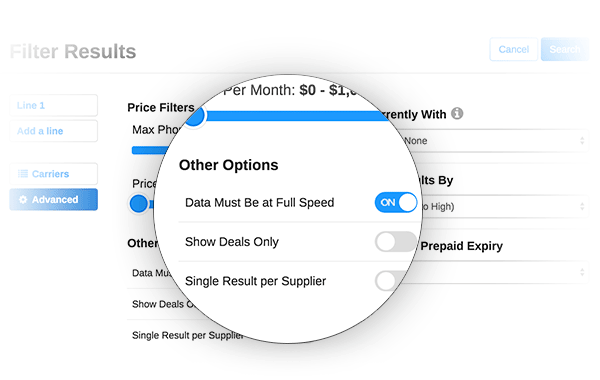
Deprioritization and tethering
The only downside of the quick speeds that 4G provides is that it means cell phone owners will use their data allowance much quicker than if they were restricted to 3G or 2G speeds. Therefore, most users will be hoping to find a plan that offers enough data to meet their usage needs and will prevent the worry of going over their plan’s data inclusions.
The four major US carriers – AT&T, Sprint, T-Mobile and Verizon, offer some form of genuinely unlimited data, but what’s important is knowing when ‘unlimited’ doesn’t really mean unlimited at all. It’s essential for consumers to understand that the best unlimited data plan doesn't mean endless high-speed downloading. Instead, most carriers determine a set amount of data that will be accessible at high-speed – this will vary between carriers and plans, but will be outlined in your contract. Any use going over this amount will be ‘deprioritized’ – that is, speeds will be significantly slowed. So while technically there is no hard cap on how much data you can use, it won’t all be delivered at your network’s top speeds. Deprioritized data is usually reduced to 2G EDGE speeds, so this makes it hard for customers to enjoy anything that requires the speedy transfer of data.
T-Mobile is now exclusively offering their new unlimited ONE plan, which includes unlimited 4G data option with HD video streaming. This plan will deprioritize your speed when you reach 28GB of data usage each month. If you like to tether your device, it allows users to do so with up to 10GB of that unlimited high-speed data, unless they upgrade to ONE Plus International with unlimited 4G LTE of data for accessing a mobile hotspot . Its plans are month-to-month and contract free, so customers aren’t locked in (although may find it difficult to use their T-Mobile phone on rival networks if they decide to switch carriers, so be warned). Because they are only offering their unlimited plan option to postpaid customers, they will give back $10 per month to customers who use less than 2GB of data per month.
Sprint also provides customers with an unlimited data option with HD video streaming for individual and family plans, and is slowing speeds after 23GB of use. Customers are able to upgrade from their existing phone plans with unlimited data to a new device, or sign up for a completely new plan. Sprint also allows its users to tether on their unlimited data plan, with up to 10GB of high-speed data.
Verizon and AT&T are now also offering new unlimited data plans for smartphones. Verizon offers HD streaming with its unlimited plan, and is slowing speeds to 3G after 22GB of data usage or 10GB of mobile hotspot per line. AT&T is also slowing speeds after 22GB of usage, but is not offering HD video streaming or mobile hotspot with its 'regular" unlimited plan. Customers can upgrade to the Plus plan to get 10GB of high-speed mobile hotspot and HD video streaming.

Using your phone as a hotspot
You’ll find that, when it comes to using your phone as a mobile hotspot, most carriers don’t love it and will either forbid it completely, or charge you extra each month for the option. If you’re looking at unlimited data purely because you like to tether, be careful about who you sign on with – you may find it much cheaper to go for a different Internet option that doesn’t involve your smartphone.
Another thing we need to stress – depending on where you live and if you do a lot of traveling, you need to know which carrier provides the best coverage for your area. The cheapest carrier may not be a saving at all if you can’t get a signal, or your phone’s 4G ability is wasted because you don’t have LTE service where you live. Even big networks have dead spots in their coverage, or some areas that are stronger than others, so ask around to find out how well your intended carrier’s network works where you'll be using your phone.
If you truly are a heavy data user who spends a lot of time downloading apps or streaming YouTube videos, you may find an unlimited plan to be a cost efficient way of enabling your data addiction. But there are a lot of customers on unlimited plans who, realistically, don’t use nearly enough data each month to justify being on such a high tier of plan. With a little research and a better idea of how much data you’re really using to give you an idea of what forwarding that email or posting that status costs you, data-wise), you can potentially save hundreds annually by downgrading yourself to a more suitable data plan.
However, for customers who genuinely do need uncapped data – bear in mind that you’ll still need to match talk and text, as well as other best data plan features, with your own cell phone habits. As always, compare different plans from different carriers before signing a 12 or 24 month commitment.
Want to be as free as the open road when it comes to your data? What’s not to want, right? With unlimited data you never have to worry about overages, you can stream endlessly, and you can be anywhere. You could even be on a long road trip. And when the beauty of nature and open road become too earthy and burdensome, you can turn on Dr. Who. (Just kidding. Be free! Look at the road! Be one with nature!) But when you’re done, you should finish that movie you started earlier in the day.
Unlimited data is a big deal. For most people, having unlimited data is more important than texting or talking. With VoIP systems like WhatsApp and Skype (apps that allow talk, text, and video communication over your cell carrier’s DATA plan), there is nothing more important than having dependable data. When you do find yourself wanting that sweet comfort of DATA, go all in for an unlimited data plan. Here’s where we at WhistleOut have done the heavy lifting, deep digging, and analyzing for you. Pick the unlimited data plan best for you and make a book jealous of your phone again.
Here’s why you’ll want unlimited data in the first place:
You stream music constantly. If you’re someone who automatically turns their phone on in the morning and stream Spotify or Pandora throughout the entire day, you’ll need unlimited data without interruptions.
You generally use more than 6GB a month. The average person uses about 2GB of data a month per device. If you are anything but average and want to stream constantly (or want the idea of always being able to stream constantly) then unlimited might be for you.
You travel and need constant access to your emails and websites. Tethering and hotspots galore. Never ask anyone what their WiFi password is again. Ever.
How to Buy Unlimited Data Plans
There was a strange moment in time when carriers stopped offering unlimited data plans. Unless you were grandfathered into an unlimited data plan, you were kind of stuck with tiers. Unlimited data plans are making a comeback. But here's a secret: there’s a limit to your unlimited data plan. You just never reach it. So you've got that going for you, which is nice. (Caddyshack, anyone? No? Let's just keep going.)
The three ways you can get your unlimited data are postpaid, prepaid, or mobile hotspot.
Postpaid plans are great for those of us who want to use a lot of data and don’t really want to do any math about gigabytes. With carriers like Sprint, AT&T, and T-Mobile offering postpaid options for those already in the know about what kind of data user they are, it makes sense to go this route. Sprint seems a bit more affordable than the rest at $60 for their Unlimited Freedom plan. This plan gives you unlimited text, talk, and data with 5GB for tethering. Verizon doesn’t offer unlimited data but you can get 4GB starting at $70. Again, you can get data with any carrier. Just be aware of how much data you actually need.
Prepaid plans are affordable if you can shell out for your phone and prepaid plan all at once. The great thing is that you don’t have a contract, you don’t need to do a credit check, and you don’t have to pay an activation fee. The only negative thing about the prepaid option is that you’d have to pay cold hard cash at the time of purchase while postpaid allows payments (comes in handy when buying a new phone). Some great options are MetroPCS, Booth, and Cricket.
Mobile hotspots are growing in popularity as more people want to avoid jumping on WiFi that seems a bit dodgy (prisoncantholdme666 is an available network but do we want to use it?) Unlimited data options are great for those who just want more WiFi without having to ask a barista what the password is. T-Mobile has a pretty good plan called One. You get unlimited data with 5GB of 4G LTE speed for hotspot. There’s an activation fee of $20. Sprint offers mobile hotspots with unlimited data for $60. See below for details on more carriers.


.png?w=280&h=280&usm=20&usmrad=0.8&fit=crop "How to Switch Phone Carriers and Keep Your Phone and Number")