- Thinner and lighter design is a big improvement
- Larger external display feels like a normal phone
- Finally has a 200MP main camera
- Very expensive
- Wobbly on a table
- No 5x zoom lens
The Galaxy Z Fold7 feels like the first time Samsung has acknowledged its competition in the foldable space. Samsung may have pioneered the category, but in recent years, brands like OPPO and Google have bested Samsung at its own game.
OPPO solved the issue of a prominent crease in 2021, just two years after Samsung's first foldable went on sale. Google's foldables put a greater emphasis on photography, delivering better camera experiences than Samsung's devices.
But over the last few years, Samsung didn't seem to take the likes of OPPO or Google seriously. Sure, the Fold got a little better every year, but not at the pace of rivals. It seemed uninterested in giving its flagship foldable better cameras or addressing the display crease.
Thankfully, this has finally changed. While the Galaxy Z Fold7 doesn't solve every issue with Samsung's past foldables, it's a significant step forward. Samsung decided to actually put up a fight this time, resulting in a device that's easier to recommend if you can stomach the price.
Top Galaxy Z Fold7 plans
|
Verizon

Simplicity Plan
$30.00/mo
+ Taxes & Fees. Price includes AutoPay & Bring a Number discount
+ $1,999.99 Upfront
|
|
Spectrum Mobile®

Unlimited Plus
$40.00/mo
+ $2,019.99 Upfront
Call Spectrum Mobile on
|
|
T-Mobile

$35 Connect by TMO 12GB
$35.00
Per 1 Month Refill
Taxes & Fees NOT included
+ $2,039.99 Upfront
Out of stock
|
|
Boost Mobile

Unlimited+ Plan
$50.00/mo
with AutoPay
+ $1,999.99 Upfront
|
|
AT&T

Extra 2.0℠
$70.00/mo
+ $2,034.99 Upfront
|
Thinpossible

It's impossible not to be impressed with how damn thin the Galaxy Z Fold7 is. When unfolded, the Galaxy Z Fold7 is just 4.2mm thick at its thinnest part. If it were any thinner, the USB-C port wouldn't fit on it.
More importantly, Samsung also cut the device's weight. The Galaxy Z Fold7 measures in a 215g, making it lighter than the Galaxy S25 Ultra. It's clear Samsung learnt a thing or two from the Galaxy S25 Edge.
This thin and light build makes the Galaxy Z Fold7 feel like any other phone, and I mean that in a complimentary way. It's a huge improvement on past models, where a thicker, heavier device was one of the trade-offs you made for opting for a foldable.

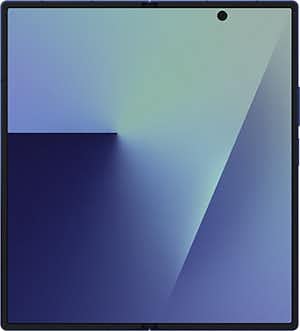
While the Galaxy Z Fold7 is thinner and lighter, it also packs bigger screens. The front display is now a 6.5-inch panel, and the inside display has grown to 8-inch. The larger cover screen reinforces that the Galaxy Z Fold7 is just like any other phone when it's shut. Once again, I mean this in the best way possible.
On past Galaxy Z Fold devices, the cover display has been too thin. Samsung improved this over the years, but with the Galaxy Z Fold7, we're at the point where there's no learning curve when you first get acquainted. Getting adjusted to the keyboard has previously been a pain point.

All this means is there's less of a reason to unfold the Galaxy Z Fold7 because you need to, for a better typing experience, for example. In a way, that's kind of paradoxical. The better form-factor means you might not unfold the Galaxy Z Fold7 as often, but at least when you do, it's because you want to, rather than because you're forced to.
Importantly, Samsung has significantly decreased how visible the crease on the internal display is. While you can still see it in some angles, it's nowhere near as prominent as on past Galaxy Z Fold models.
The Galaxy Z Fold7's redesign doesn't come without a few compromises, however. The fingerprint sensor is super thin, and takes a while to get used to. There's no longer support for S Pen, which I don’t mind, but I know Samsung's stylus has its diehards. And there's just how much the camera bump protrudes.
While aesthetically I have no issues with the chonky camera bump, it does have its impracticalities. The Galaxy Z Fold7 is insanely wobbly if you sit down on your desk, screen up. Unfolding it doesn't make it that much better.
It's also hard not to worry about durability. This is an issue shared by all foldables—not just the Galaxy Z Fold7—but the moving parts make it feel more fragile. When I've been walking the dog with the Galaxy Z Fold7, I've been far more concerned about what would happen if it fell out of my pocket than I am with a traditional slab-style phone. The $2,000 price tag certainly doesn't help.
Better fundamentals

When it comes to phone fundamentals, the Galaxy Z Fold7's cameras are its biggest upgrade. Samsung has finally kitted its most expensive phone out with a 200MP primary camera, just like its Ultra slab phones.
If you've used a Samsung flagship in the past, there aren't any surprises here: the Galaxy Z Fold7 is subject to the usual pros and cons. Features like the excellent portrait mode are balanced out by a somewhat inconsistent night mode, where you can get off putting colors or weird artifacting. But by and large, the 200MP lens does a great job, and it's nice that Samsung's most expensive phone finally has its best camera.
While the primary camera now matches the Galaxy S25 Ultra, the ultra-wide and telephoto lenses are still steps down. The ultra-wide is a little brighter, which is welcome, but it doesn't have the same impressive macro mode as the Galaxy S25 Ultra.
The 3x telephoto lens is on par with the Galaxy S25 Ultra's 3x lens, but the more impressive 5x telephoto lens is absent. While shoving a 5x zoom lens in such a slim body would no doubt be a challenge, it's now the standard for phones in this price category.
The Galaxy Z Fold7 may not outclass rivals in terms of photo quality, but what's on offer now is much more in line with what you'd expect for a device this expensive.
Samsung Galaxy Z Fold 7 camera samples
Check out these camera samples taken on the Galaxy Z Fold 7. Click or tap on any photo to see a larger version.


One other important camera change is that Samsung has axed the under-screen camera present on past Galaxy Z Fold models. While this might seem like a step back from a technology perspective, it represents an improvement in photo quality. The under-screen cameras in past Galaxy Z Folds consistently took low-resolution, blurry photos.
And personally, the under-screen camera was more distracting than a hole-punch camera. I do, however, wish Samsung had right-aligned the hole-punch camera; it can get in the way of full-screen content.

On the battery front, Samsung hasn't pushed into ultra-high capacity batteries like OPPO, sticking with a 4,400mAh cell. While you don't get class-leading longevity, what's on offer is still very respectable. In my testing, I was able to get around six hours of screen time per charge, which is roughly a day of moderate usage with a comfortable buffer.
For most of my testing, I was using the cover display around 75% of the time. If your usage skews toward the internal display, I'd expect a little less per charge.
While the battery is only a little bit better than last year's Galaxy Z Fold6, it's a solid step up from the Galaxy Z Fold5 and older. Those models were looking at less than five hours of screen time per charge, and this was even shorter on earlier iterations.
And as you'd hope from a $2,000 phone, performance is top-notch. There's nothing to complain about here. Importantly, Samsung is continuing to promise seven years of software upgrades and seven years of security updates for the Galaxy Z Fold7.
Samsung Galaxy Z Fold 7—Final thoughts

The Galaxy Z Fold7 is a much-improved take on Samsung's flagship foldable, following a few stale years. Unfortunately, the one thing that hasn't changed is price. Starting at $1,999.99, the Galaxy Z Fold7 is the kind of device that's simply unattainable for many.
That's the kind of money that can buy you a flagship phone and a tablet. A Galaxy S25 Ultra and a Galaxy Tab S10 FE, or an iPhone 16 Pro and an iPad Air. In many cases, two devices could end up being a smarter buy.
But for the right customer, the calculus has started to shift. The advancements made by the Galaxy Z Fold 7 reveal why you might want a phone and a tablet in one package. It's a capable phone that becomes a tablet when you need it to be, without past issues like an overly hefty build or the prominent display crease.
Sure, two discrete devices may still perform better, but the trade-offs made by the Galaxy Z Fold 7 are smaller than ever.
All the latest cell phone news and deals, delivered every Thursday.
Alex Choros

Find a better phone plan
Thousands of cell phone plans unpacked. All the facts. No surprises.


.png?w=280&h=280&usm=20&usmrad=0.8&fit=crop "Best Cell Phone Deals for October 2026: Get the New iPhone 18 Pro for Free")


.png?w=280&h=280&usm=20&usmrad=0.8&fit=crop "Cell Coverage Near You: Who Has the Best 5G Network?")


.jpg?w=280&h=280&usm=20&usmrad=0.8&fit=crop "Verizon Fios Internet vs. Optimum Internet")