

Image: Max McCaskill
The biggest wireless industry news stories of the year have been SpaceX’s IPO and reports that the company is gearing up to launch a Starlink-backed mobile service. Virtually every week since those reports surfaced has seen news stories featuring major carrier executives arguing over the impact this kind of service would have on their own companies.
The tech news worth knowing, what it means for you, and what everyone else is getting wrong, delivered right to your inbox.
It’s also led to a lot of speculation from experts and non-experts about how it could potentially revolutionize wireless phone coverage and completely overtake major carriers. As per usual, I’m going to be the odd man out and say a lot of this talk is overblown.
To be clear: I have no insider knowledge of what Starlink is planning. However, I am someone who spends a lot of time using my phone and testing network coverage across the country. So far, I struggle to see why a satellite-based wireless carrier would be a better choice than a traditional tower-based carrier.
Wireless networks have gotten incredibly strong and can offer high-speed data that rivals cable connections in some areas. They’re also larger than ever, with many people rarely ever leaving a coverage area unless they venture into wilderness areas like remote national parks.
While the idea of a satellite phone service sounds great in theory, in practice, it’s difficult to see how Starlink Mobile or any other satellite provider will be able to offer a more appealing product than the major carriers. The current landscape of terrestrial towers supported by satellite connectivity in dead zones might already be the best outcome for everyone.
Hi there! I'm Max, and I'm a wireless industry expert. What does that mean? For one thing, I get paid to play on my iPhone. But more than that, it means I've spent years reviewing carriers, testing smartphone hardware, and reporting on the news that impacts your phone bill.
Smartphones and wireless plans are some of the most important pieces of technology in most people's lives, but you probably don't think about them until your plan is too expensive or it's time to upgrade to the newest phone. Unfortunately, that means you miss a lot of interesting and important stuff that can affect your life and wallet. The WhistleBlower is our way of cutting through the noise and flagging the things we think you need to know about.
Want The WhistleBlower in your inbox? Sign up below.
I recently took a two-week trip to New Mexico, where I drove over 1,000 miles to visit three national parks, two national monuments, one BLM archaeological site, and the Very Large Array radio observatory. As someone who is terrified of being stranded out in the desert, I also prepared for the trip by reminding myself how to use the satellite features of my iPhone 14 Pro and purchasing the multi-network add-on for my US Mobile plan.
These features meant that if I lost my normal AT&T service, my phone would automatically connect to Verizon’s network if it was available. Then, if I was in a true dead zone where Verizon wasn’t available either, I could still send messages or my location through a satellite to stay connected.
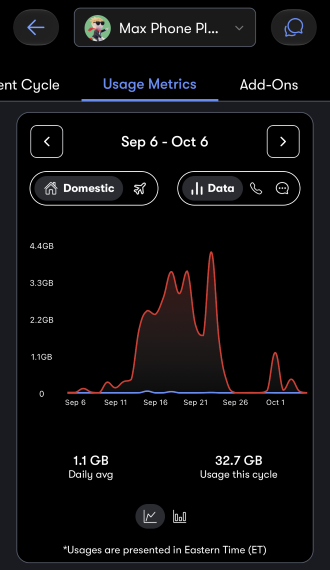
Image: Max McCaskill
By the end of the trip, despite traveling through some of the most remote areas of New Mexico and doing several hikes, I had not needed my satellite service a single time. Even more surprising, while I plowed through over 32GB of data to get around, my phone only pinged to Verizon’s service for around 90MB. In other words, AT&T provided enough coverage for over 99% of my data needs, and I had a signal whenever I actually wanted to use my phone.
Sure, this is just a personal anecdote, but these numbers did make me consider two major points:
- Wireless carriers have done an incredible job getting towers into places where people are actually traveling.
- It’s difficult to see where a satellite-based phone service offers something truly unique if customers can already connect to a tower on some of the most remote stretches of road in the Southwest.
The appeal of a service like Starlink Mobile is the idea that you can get connected anywhere. As a Starlink internet customer in an extremely rural area, I can say it has brought high-speed internet to a place I never thought it would be available. However, I’ve also cautioned that if you have access to any other high-speed internet connectivity type, you should pick that instead. Fiber and cable are simply faster, more reliable, and often cheaper. Starlink is not built for people who have options, so people who live in urban areas should probably not hook up to it.
I think that we can apply that same logic to a large-scale Starlink Mobile wireless carrier. Satellite service could offer connectivity in the most remote regions of the country, but what Starlink will have to show is that its quality can compete with the major carriers everywhere else. We frequently measure download speeds of 200Mbps or more during our network testing in urban areas. My coworker Angelo Ilumba even clocked an 850Mbps result on Verizon’s 5G UW network in Southern California.
Earlier this year, SpaceX announced that it's targeting top download speeds of 150Mbps for wireless customers. That's extremely fast compared to the limited speeds of the present, but it still severely lags the top speeds of tower-based 5G networks. There are also concerns surrounding how Starlink plans to get its coverage inside of buildings or in areas without a clear view of the sky. It's worth noting that I still lose signal during thunderstorms, and smartphone satellite antennas are much weaker than the Starlink dish sitting out in my front yard.
It’s true major carriers have service gaps in extremely remote areas away from roads, which are the places Starlink Mobile can cover. However, most people do not spend the majority of their time hiking in the wilderness of America's backcountry. Instead, they're at home in an urban area. If you live in a city or suburb, choosing slower speeds and less reliable coverage at home to ensure satellite connectivity when you happen to travel does not feel like a great trade-off. Like the internet service, Starlink Mobile may only be a better option than traditional carriers if you live in a rural dead zone with no normal network coverage.
Once again, no one has a complete picture of what Starlink is planning, and this could change as the company releases more information and expands its constellation with updated satellites. I also have a strong suspicion that Starlink Mobile will require some sort of ground infrastructure, whether that’s partnering with an existing network or building a limited version of its own, which could offer a better experience.
However, until issues like slower speeds and suboptimal connectivity are addressed, take any "expert" predictions that Starlink Mobile will displace the major carriers with a grain of salt. While the service could finally eliminate dead zones, there's a good chance the current model of using a traditional wireless network and only paying for satellite coverage when you need it will remain the best option for most people.
More from WhistleOut on Starlink and satellite connectivity:
We’ve been following Starlink and satellite connectivity for years. Here are some of the most important guides to help you learn more about these services and keep yourself connected:
- Starlink Review: It’s The Best Internet I’ve Ever Had: I’ve been a Starlink internet customer for years. Learn why I’ve had a great experience with this service and who should consider satellite internet.
- Satellite Internet: Everything You Need to Know: Wondering about satellite internet? Our crash-course guide can tell you exactly how this internet connectivity type works and point you towards the best providers.
- Get Help in the Middle of Nowhere with iPhone Roadside Assistance: iPhones have some of the best satellite features currently available. Learn how to use the free Emergency Roadside Assistance feature included with most new iPhones so you’re prepared if you ever have car trouble.
- T-Satellite 911 Texting Is Free for Everyone: Here’s How to Enroll: T-Mobile’s T-Satellite 911 service (powered by Starlink) is available to customers on any network for free. Sign up now so you’re prepared if an emergency strikes while you have no signal.
Max McCaskill
Sr. Staff Writer

Find a better phone plan
Thousands of cell phone plans unpacked. All the facts. No surprises.