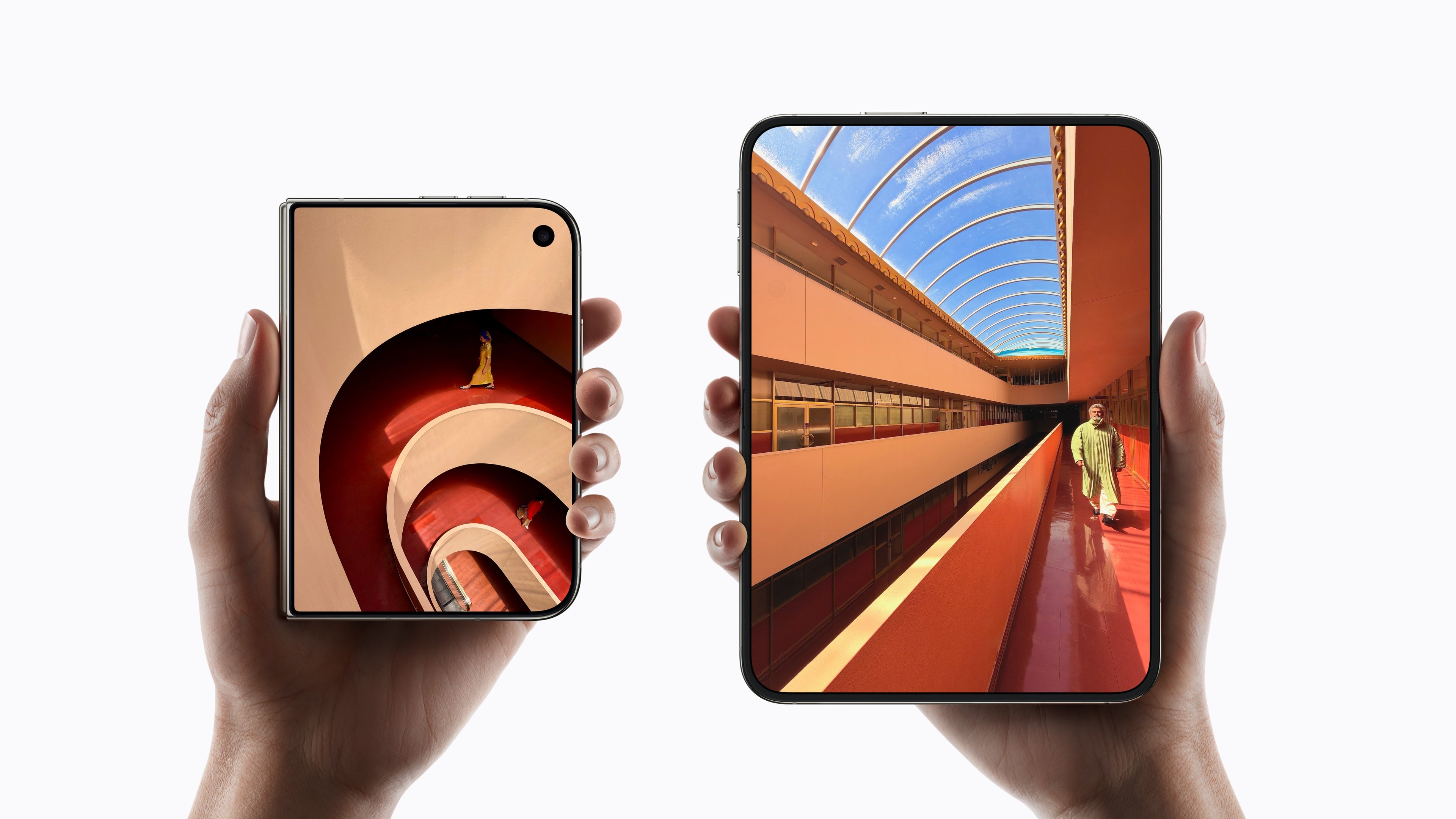
TL;DR: Apple's iPhone Duo is a unique take on the usability of the foldable
- iPhone Duo starts at $1,999, with preorders beginning October 16 and availability starting October 23.
- The 7.6-inch foldable display gives users substantially more room to work, watch, and browse without carrying a tablet.
- iOS 27 was designed entirely around the folding screen, with features such as Split View and paired apps built into the experience.
- The real question is whether Apple has made a foldable phone that is genuinely easier to use, rather than simply more impressive to look at.
We’ve all had that moment when a phone screen suddenly feels too small. Maybe you’re trying to compare two things in Safari, follow a recipe while texting someone, or keep a map open while checking a message. You can do all of it on a normal iPhone, but sometimes it feels like trying to organize your desk on a postage stamp.
That’s why the iPhone Duo interests me more as a usability experiment than as a piece of hardware. Apple isn’t just making an iPhone that folds. It’s trying to build an iPhone experience around the idea that you should be able to see and do more without constantly switching between apps.
The iPhone Duo’s real trick is that it changes depending on how you hold it
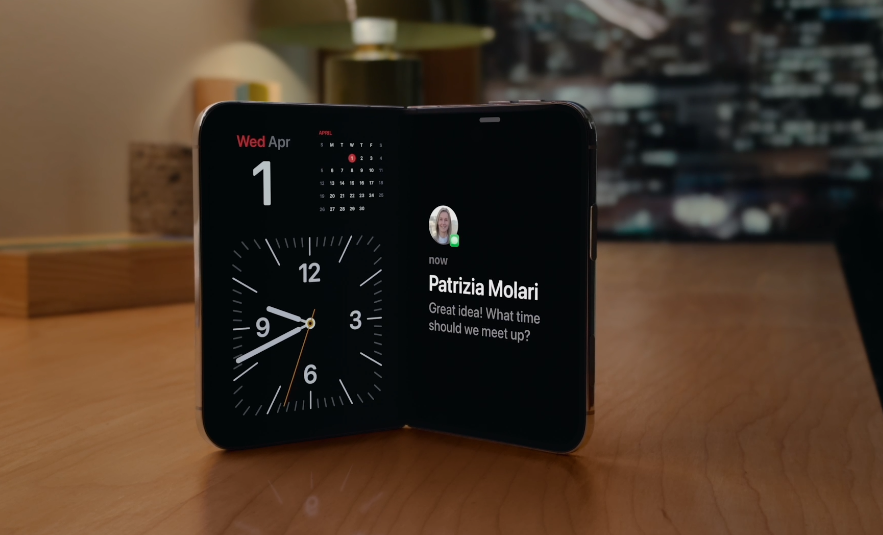
Image: Apple
Apple isn’t the first company to put a big screen inside a phone that folds. Samsung, Google, and others have already established that basic formula.
What Apple is doing differently is treating the hinge as part of the user interface, not just a way to make the phone smaller. iPhone Duo can be used in different positions, and iOS 27 is designed to change with them.
Open it vertically for more space for typing, browsing, and scrolling. Open it horizontally, and you can use Split View to put two apps side by side. Prop it up, and it can become a hands-free screen for watching a show, making a call, or following a workout.
That’s a more interesting idea than simply giving you more screen; it’s changing jobs depending on how you position it.
And that may be Apple’s biggest opportunity with Duo. Most foldables still feel like phones that happen to have a hinge. Apple is trying to make the hinge part of the reason you use the phone differently.
Whether that works will come down to whether you find yourself changing how you hold the phone because the software makes it worthwhile.
Apple is betting that iOS 27 makes the fold worth opening
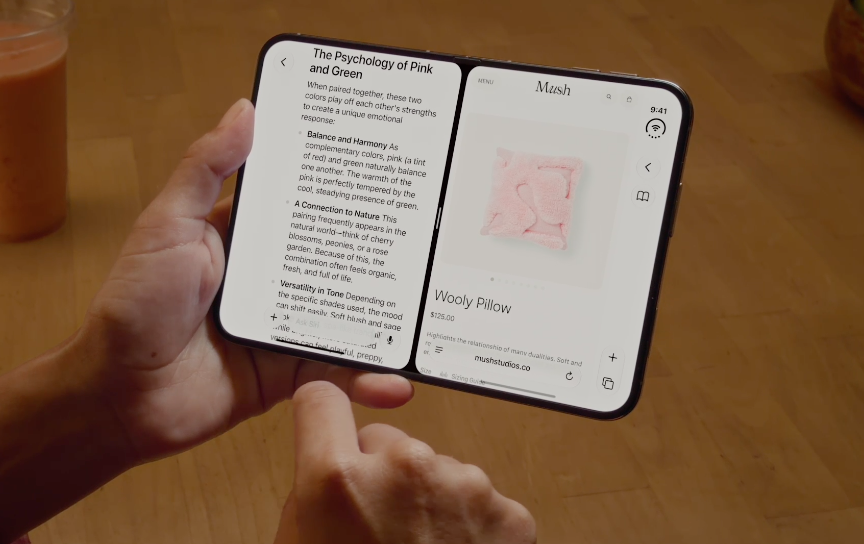
Image: Apple
A foldable phone is only useful if the software knows what to do with all that extra screen.
This is where Apple may have an advantage. With Split View in iOS 27, you can put two apps next to each other on the larger display. You can also open two windows from the same app and save pairs of apps for quick access later. For the person actually using the phone, that means fewer trips back and forth between apps.
And that’s an important distinction. The best new phone features aren’t necessarily the ones that let you do something impossible. They’re the ones that make an existing task less irritating.
The camera could benefit from the fold, too
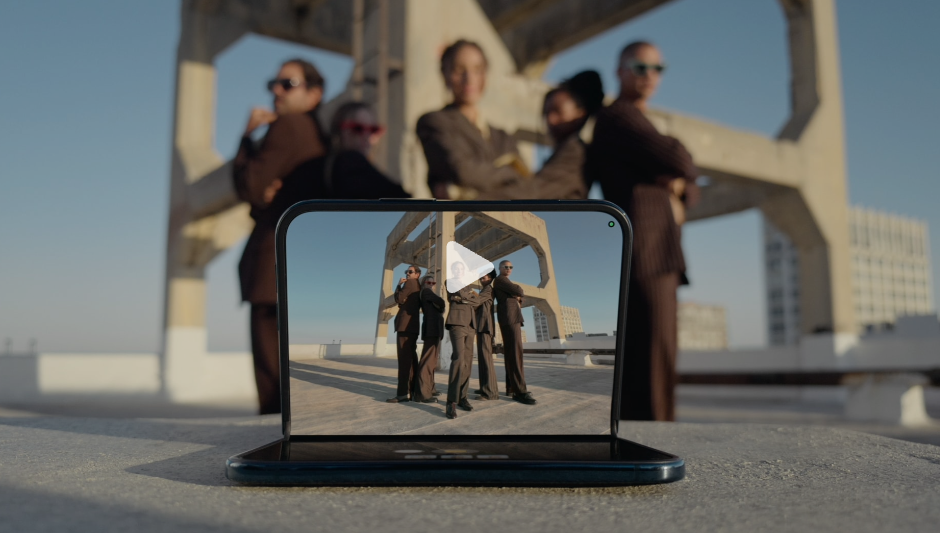
Image: Apple
The camera is another place where the Duo’s design could solve a very ordinary problem.
There are also now three different ways to use the screen in FaceTime or selfies. Duo Preview gives the person in front of the camera a view of the shot using the phone’s other display, so they can see what the camera is actually seeing and adjust themselves accordingly (instead of the back-and-forth of “Move over a little! A little more! No, not that much!”).
My particular favorite is Smart Take, which recognizes when everyone is posed and ready for the photo and captures the image automatically (no more blinking flash countdown to blind you right before saying “Cheese!”). Our editor’s favorite feature is Duo FaceTime, which will practically eliminate the need to crowd around a phone to get everyone in the call.
These sound like small features, and they are. But these are the kinds of details that can make a new form factor feel worthwhile. Instead of folding the phone because Apple says folding phones are cool, you’re folding it because the design gives you another useful screen.
The biggest test will be whether people actually use the big screen
This is where I’m most curious about Duo. We’ve seen plenty of phones with ambitious features that look fantastic in a launch presentation and become irrelevant a month later. A feature can be technically impressive and still fail the much harder test of fitting naturally into someone’s routine.
The iPhone Duo has a chance to avoid that because the larger display isn’t just there for entertainment. You could use it for reading, shopping, navigation, messaging, multitasking, photo-taking, and work. Those are things people already do every day.
The question is whether opening the phone becomes an automatic part of those activities. If it does, Apple may have something truly different.
Pro tip: The real way to test the fold
Don’t judge the Duo by watching a movie on the 7.6-inch screen. The better test is to use it for something annoying on a normal phone. Compare two products, follow directions while texting, research a purchase, or keep two apps open at once. That’s where the extra screen has to earn its keep.
There’s still a very large catch: $1,999
The biggest problem with the iPhone Duo isn’t its screen. It’s the price.
At $1,999 for the 256GB base storage, Duo costs enough that buyers aren’t simply deciding whether they want a new iPhone. They’re deciding whether they want to spend nearly $2,000 to change how they use their phone. That’s a much harder sell.
Apple can make the monthly payment look more manageable through carrier financing and its own revamped leasing program, but the underlying cost doesn’t disappear. And for someone who mostly uses an iPhone for calls, messages, photos, social media, and the occasional Google search, a traditional iPhone may remain the better value.
That’s an important part of this story. Duo isn’t automatically a better iPhone just because it does more. It’s potentially a better iPhone for someone whose daily habits actually benefit from having more space.
The iPhone Duo still has some things to prove
We also won’t fully understand parts of the experience until people spend real time with the phone.
The durability of the folding mechanism will matter. So will how noticeable the crease becomes with everyday use, how well third-party apps adapt to the larger display, and whether users actually keep taking advantage of the multitasking features after the novelty wears off.
Apple Pencil support is also coming later this year, while Apple’s new Siri AI features are launching in beta. Those features could eventually make the Duo more useful, but I wouldn’t buy the phone today based on what they might become tomorrow.
There’s also the carrier question. Duo is eSIM-only, and Apple says it works with more than 500 carriers worldwide, including the Big Three (AT&T, T-Mobile, and Verizon). That should make it relatively straightforward for most U.S. buyers, but carrier promotions like trade-in deals and buy-one-get-one (BOGO) offers could have a major effect on how approachable that $1,999 price feels.
Is the iPhone Duo worth buying?
I think Apple has done something genuinely interesting here. Not because it invented the foldable phone (it didn’t), but because the company seems to have figured out why it should fold in the first place, and has ensured the software changes accordingly to fit the use case. The point of a foldable isn’t having a phone that folds; it’s having a phone that can completely change depending on what you’re trying to do.
That’s a much more compelling idea. But at $1,999, I’ll personally let other people be the early adopters.
All the latest cell phone news and deals, delivered every Thursday.
Lauren Hannula
Managing Editor

Find a better phone plan
Thousands of cell phone plans unpacked. All the facts. No surprises.