

Image: Max McCaskill
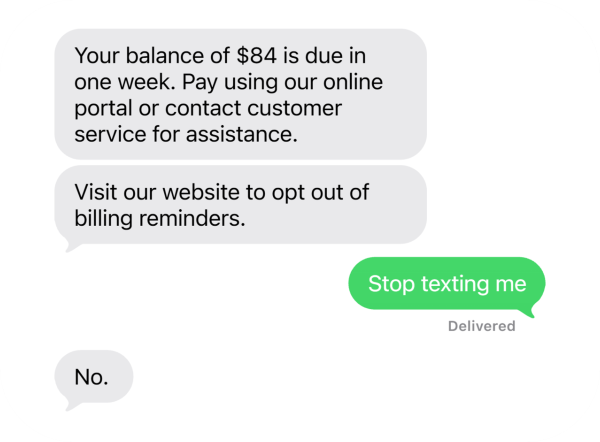
If you've ever replied STOP to a robotext, told a customer service rep to stop calling you, or sent a company an annoyed email asking to be left alone, you've been using a consumer right granted by the FCC. For over a decade, businesses have had to honor opt-out requests made by any “reasonable means,” and failing to take you seriously could lead to punishment.
The tech news worth knowing, what it means for you, and what everyone else is getting wrong, delivered right to your inbox.
However, a new FCC policy that went into effect on November 25 just weakened that rule.
The FCC now lets companies designate an official way to opt out of their messaging, allowing them to ignore requests that come in any other way. It also lets companies limit your opt-out to one type of alert, instead of assuming you want to end all forms of messaging.
In theory, this means that companies can help you be more selective in the kinds of messaging you receive, like making sure you can still get shipping updates for a specific item while declining billing texts. In practice, the result for some consumers will be that companies will be able to blow up your phone with all kinds of alerts unless you tell them not to in the correct way.
Hi there! I'm Max, and I'm a wireless industry expert. What does that mean? For one thing, I get paid to play on my iPhone. But more than that, it means I've spent years reviewing carriers, testing smartphone hardware, and reporting on the news that impacts your phone bill.
Smartphones and wireless plans are some of the most important pieces of technology in most people's lives, but you probably don't think about them until your plan is too expensive or it's time to upgrade to the newest phone. Unfortunately, that means you miss a lot of interesting and important stuff that can affect your life and wallet. The WhistleBlower is our way of cutting through the noise and flagging the things we think you need to know about.
Want The WhistleBlower in your inbox? Sign up below.
What's changing with the FCC’s rules on robocalls and texts?
Under the FCC’s previous rules, you could opt out of automated messaging by using any reasonable method. For this policy, “reasonable method” was extremely broad and could include using official methods like replying “STOP” to a text message, or informal ones like yelling at a customer service agent that you wanted to be taken off their list. After that, companies had up to 10 business days to process your request.
What's changing is that companies can now designate one or more official opt-out methods. The updated "Enhancing the Ability of Consumers to Control the Robocalls" rule—called 47 CFR § 64.1200(a)(10) for short…yes, really—states that once a company selects an official method, they don't have to process requests made in any other way.
Companies can choose from three options:
- Pressing a key or saying a word during an automated call
- Replying to a text with one of seven standard words: STOP, QUIT, END, REVOKE, OPT OUT, CANCEL, or UNSUBSCRIBE
- Using a website or phone number provided by the company for opt-outs
Companies must clearly disclose their new official method on every call or text, and anyone using reply texts has to accept all seven words. But this does mean that if a company creates an opt-out website for its official method, replying STOP to their texts may not remove you from their list anymore.
Businesses that don't pick an official method still have to honor any reasonable request.
Opting out of one message may not apply to others
The other major development from this rule is that companies now have the freedom to categorize their automated messages. For example, if you opt out of an informational message like a payment reminder, you may still receive login codes, shipping information, or account alerts.
This is actually the positive element of this new FCC policy. Most people who opt out of low-priority, repetitive reminders probably don't want to also lose emergency messages like fraud alerts or two-factor authentication codes.
There’s also good news in that these new categories don’t apply to marketing calls and texts. Opting out of a marketing message still stops all of that company's advertising. The FCC held firm on that front, so this won’t open the gates to a flood of ad spam you can’t get out of.
How will this impact me? It’s harder to get away from robocalls and texts
Previously, the burden of ending automated messaging was on companies. If you informed them in a reasonable way, they were obligated to recognize you wanted them to stop messaging you and take action.
Now, the burden shifts back to you as the consumer. You have to opt out the correct way, or they can simply ignore you. Replying "please stop texting me" or making a request to a live customer service agent may no longer count if the company has designated another method.
To be clear, companies can't hide their official method, so it should be included on every message you receive. However, nobody likes being bombarded with automated messaging, and now it’s on consumers to do the legwork of figuring out the correct method to get the messages to stop.
It's easy to imagine someone replying STOP to a robotext, continuing to get them, and assuming the system is broken when the company is technically following the rules. But know that from this point forward, if a company is getting a little too friendly with its automated texts and robocalls, you may need to read the fine print if you actually want them to stop.
More from WhistleOut on robocalls and spam texts
Robocalls and spam texts can be incredibly frustrating. Here are a few of our best guides for how to deal with them if your phone is being bombarded with automated messages:
- The Robocall Epidemic: Which States Are Hit Hardest by Spam Calls?: We analyzed robocall data from all 50 states and surveyed 1,000 Americans to see who's getting hit hardest.
- That Package Delivery Text Is Probably a Scam: Don’t let scammers trick you into thinking there’s a problem with your package. Here’s how to recognize package delivery scam texts and what to do about them.
- How to Stop Robocalls: 6 Ways to Stop Them for Good: From the Do Not Call Registry to carrier tools and third-party apps, here's how to cut down on robocalls.
- How to Block Spam Callers: Here are step-by-step instructions for blocking spam calls and texts on iPhone and Android.
Max McCaskill
Sr. Staff Writer

Thousands of cell phone plans unpacked. All the facts. No surprises.

Related Articles


Related Topics
Featured Op-EdPopular Topics
Featured App Reviews iOS News Coverage Device Reviews Device Explainers App Roundups T-Mobile Carrier Explainers