Image: DeFlock
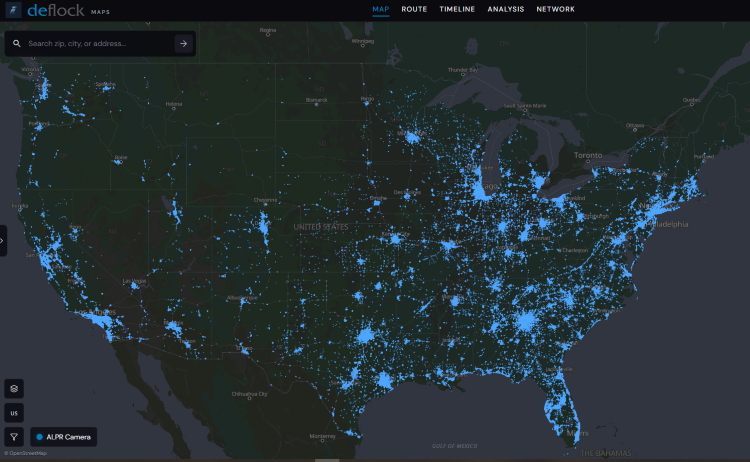
Flock cameras and other AI-enabled surveillance systems have become a major flashpoint in the news. According to crowdsourced mapping systems like DeFlock, there are now over 131,000 of these cameras scattered across the country. Unfortunately, their rapid expansion, confusing data practices, and the fact that many people don't understand how they work have created a climate of panic on social media.
The tech news worth knowing, what it means for you, and what everyone else is getting wrong, delivered right to your inbox.
As a privacy advocate, I despise these systems and have many, MANY concerns about the potential for abuse. Dozens of stories have already popped up featuring officers using them to stalk romantic partners or wrongfully accuse people of crimes. That said, some of the claims about Flock cameras on social media are making people feel genuinely unsafe and giving bad advice. One of the more popular viral claims involves smartphones, and I've seen it commented on Facebook, X, and Reddit almost every time Flock cameras are mentioned.
The claim goes something like this: In addition to taking photos of your car, Flock cameras can also scan your phone using Bluetooth to get copies of your messages, contacts, web browsing history, and photos. Then anyone with access to Flock, like the local police or federal government, can search the contents of your phone.
Here's the truth: Flock cameras cannot access the contents of your smartphone through Bluetooth signals. Your device is encrypted and doesn't share data like that.
The rumor seems to stem from confusion about two different technologies frequently used by local governments:
- Automated License Plate Reader (ALPR) systems that monitor vehicles
- Bluetooth and Wi-Fi traffic readers that passively detect phone IDs to measure traffic conditions
ALPR systems take photos of your vehicle, license plate, and any other identifying characteristics. While companies like Flock and Axon have made them go viral for partnering with police and adding AI capabilities, these systems have been around for decades. If you've ever driven on a toll road and gotten a bill in the mail, your vehicle was captured and processed by an ALPR camera.
Bluetooth and Wi-Fi traffic readers detect the Media Access Control (MAC) address of your phone or other devices as you drive by. To keep things simple, the MAC is essentially your device's 12-character fingerprint set by the manufacturer. When you drive past a reader, it logs an anonymized version of your device's address in the system. A few miles later, when you drive past a second reader, it clocks your device again and measures how long it took you to get there. Using that data, cities can send out live traffic reports or measure how busy a road is for infrastructure planning.
Neither one of these systems can actually hack into your device through Bluetooth or Wi-Fi. Remember, your smartphone is strongly encrypted, so it's difficult for anyone to break in, let alone a camera you drive past for a few seconds. Plus, your device isn't constantly sharing all of your messages, browsing history, photos, and more over Bluetooth in the first place.
If you're using something like a smartwatch, CarPlay, or Android Auto, your devices will cycle small bits of data like health information, GPS directions, or notifications, but not the entire contents of your phone. What little information is exchanged over Bluetooth is also encrypted, so it would be difficult for anyone who intercepted it to use it anyway.
There are genuine concerns about companies combining ALPR technology and Bluetooth readers to develop cameras that register both vehicles and device IDs into one database, and those kinds of systems are already being tested across the country. I expect that the Supreme Court will eventually weigh in on all of these systems, as much of it seems like the same kind of tech fishing expeditions that were restricted in the smartphone geofencing ruling earlier this year.
For now, though, whether you like them or not, ALPR systems on the sides of roads are largely just photographing your car. Despite what social media may say, you don't have to do things like turn off your phone, disable your Bluetooth, or download sketchy "privacy" apps just because you're driving past a camera.
Did you like this article? Good! Why not make us a preferred source in Google? Click below, tick the box, and WhistleOut stories will show up more often when you search for related content.
More from WhistleOut on encryption and data privacy:
While you don't have to worry about Flock stealing your smartphone data, there are plenty of other threats. Here are some of our best guides to keep you safe:
- Data Privacy in 2026: Americans Aren't Protecting Their Data: We polled 1,000 Americans about their data security habits and found that 40% of people never review the privacy policies of their devices, apps, or the websites they visit.
- How to Use iPhone Safety Check to Take Back Your Privacy: Your iPhone has a special safety feature to make sure you aren't sharing too much data with apps or other people.
- The Android Privacy and Security Guide: Here are five built-in settings to lock down your Android and secure your data privacy.
- Signal: The Messaging App That Actually Respects Your Privacy: Our guide to Signal and why it's the gold standard for third-party encrypted messaging apps.
Hi there! I'm Max, and I'm a wireless industry expert. What does that mean? For one thing, I get paid to play on my iPhone. But more than that, it means I've spent years reviewing carriers, testing smartphone hardware, and reporting on the news that impacts your phone bill.
Smartphones and wireless plans are some of the most important pieces of technology in most people's lives, but you probably don't think about them until your plan is too expensive or it's time to upgrade to the newest phone. Unfortunately, that means you miss a lot of interesting and important stuff that can affect your life and wallet. The WhistleBlower is our way of cutting through the noise and flagging the things we think you need to know about.
Want The WhistleBlower in your inbox? Sign up below.
Max McCaskill
Sr. Staff Writer

Find a better phone plan
Thousands of cell phone plans unpacked. All the facts. No surprises.


.png?w=280&h=280&usm=20&usmrad=0.8&fit=crop "Best Cell Phone Deals for October 2026: Get the New iPhone 18 Pro for Free")