

Image: Max McCaskill
Over the past few weeks, Starlink has begun rolling out a new dynamic pricing model for its subscribers. This new policy means that customers who live in areas where Starlink has too many subscribers may have to pay a higher price on their bill, in some cases up to 20% more.
The tech news worth knowing, what it means for you, and what everyone else is getting wrong, delivered right to your inbox.
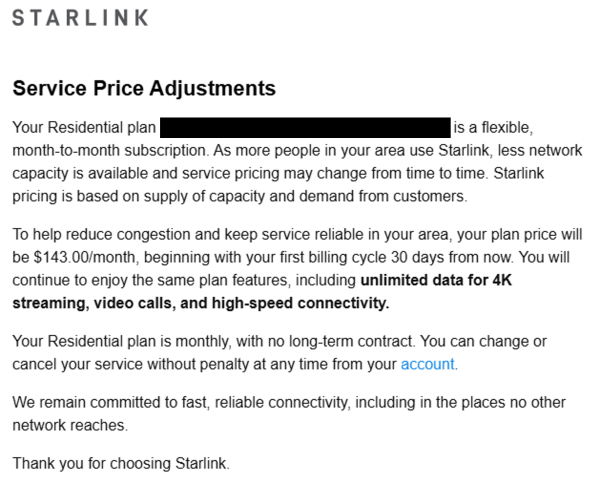
I am one of those customers and just saw my bill increase to $143/month. My old bill was $130/month, which basically means I’ll pay an extra $156/year for the same internet plan and service. Although I’ve been a happy Starlink customer for over four years and even called it the best internet I’ve ever had, this hike is pushing me to look for other options.
In the past, Starlink had hard caps on the number of subscribers it allowed to join so it could provide enough capacity. However, it’s recently adjusted its strategy, allowing virtually anyone to sign up whenever they want. This has led to capacity shortages and forced Starlink to encourage people to leave the service by jacking up plan costs.
The easiest way to explain it is this: Your Starlink internet bill now depends on how many of your neighbors sign up.
The problem is that many customers are with Starlink because they have no other options for service. Those customers are being forced by Starlink to either pay up or simply go without high-speed internet.
Hi there! I'm Max, and I'm a wireless industry expert. What does that mean? For one thing, I get paid to play on my iPhone. But more than that, it means I've spent years reviewing carriers, testing smartphone hardware, and reporting on the news that impacts your phone bill.
Smartphones and wireless plans are some of the most important pieces of technology in most people's lives, but you probably don't think about them until your plan is too expensive or it's time to upgrade to the newest phone. Unfortunately, that means you miss a lot of interesting and important stuff that can affect your life and wallet. The WhistleBlower is our way of cutting through the noise and flagging the things we think you need to know about.
Want The WhistleBlower in your inbox? Sign up below.
What is Starlink’s surge pricing model?
Starlink’s new surge pricing is a form of dynamic pricing. The provider looks at the internet capacity in your local area every quarter and adjusts that region’s bills accordingly. Areas with lots of customers will see their bill increase, while areas with fewer customers may see a discount.
The main factor driving this change is that Starlink has reached its capacity in many regions. With the company’s cells full of residential customers, and its network also serving T-Mobile customers and multiple airlines, the service is stretched thin. Plus, the next-generation V3 constellation isn’t yet large enough to help increase capacity.
In its email to me announcing the hike, Starlink said the higher price is meant “to help reduce congestion and keep service reliable in your area.” But the only way a price hike reduces congestion is if fewer people use the network as a result.
In the early days of the company, capacity issues were handled with waitlists and speed throttling. Now, Starlink is turning to pricing penalties to drive customers away.
What’s the problem? Many Starlink customers have no other options
“Just switch internet providers” feels like a simple solution. However, it falls apart once you remember that many of Starlink’s customers have no other options for internet service.
The major benefit of Starlink is that, as a satellite provider, it beams internet down from space. Unlike cable or fiber, Starlink has almost no limits on where it’s available, so even customers in extremely remote and rural areas can get high-speed internet. Unfortunately, when these rural customers are hit with price hikes, they may not have another service to switch to.
I am one of those customers. Before Starlink, my internet was a DSL plan on an old copper phone line. Due to provider changes in my area, I couldn’t switch back to that plan if I wanted to. Starlink is my only option for the internet, and since much of my internet use comes from remote work and streaming, I can’t cut back on my usage. Starlink is essentially gouging me for more money because I have no other options for service.
What can I do if Starlink raises my bill?
If you’re like me and Starlink just raised your prices, how you can respond really depends on whether you have other options for service. Downgrading to a lower plan or simply using less internet is not an option, since these increases apply to all residential plans in an area.
If you have other options like cable, fiber, or 5G home internet, you should switch internet providers. The easiest—and usually cheapest—alternatives are cable and fiber. If you have access to one of these connections, you probably shouldn’t have signed up with Starlink in the first place.
If you don’t have a physical connection but live in an area with strong cell coverage, 5G home internet through a carrier like AT&T, Verizon, or T-Mobile is another option. 5G home internet runs on the same wireless networks as your cell phone, and some plans can reach download speeds of 300Mbps or higher.
Unfortunately, if you’re like me and can’t switch to cable, fiber, or 5G home, you’re stuck with Starlink until a low-Earth-orbit competitor like Amazon Leo comes out. While it hasn’t launched yet, you can sign up to be an early adopter. Other satellite competitors like Viasat and HughesNet struggle against Starlink’s faster speeds, which makes them poor substitutes.
If you have a phone signal at your home—even if it isn’t strong enough for 5G home internet—you may still be able to use an unlimited plan and mobile hotspot if you aren’t a heavy internet user. Most smart televisions can link with smartphones to cast videos, allowing you to stream using your mobile data. For simple tasks like scrolling social media or online shopping, you can use your mobile hotspot with devices like tablets and laptops. However, you’ll need a truly unlimited data plan, and it’s not a great choice for things like remote work or online gaming.
Starlink built its reputation by reaching the people every other provider left behind. Charging those people higher prices for circumstances out of their control—knowing they can’t switch—feels like holding their internet service hostage. Unfortunately, there’s not much you can do unless your neighbors start quitting Starlink. In the meantime, the best thing you can do is check for other service options and keep an eye out for Amazon Leo.
More from WhistleOut on wireless home internet:
Satellite internet is not the only option for wireless internet. Learn more about 5G home internet with these guides.
- What is 5G Home Internet?: 5G home internet uses the same wireless networks as your phone plan. Here’s how it works and how to figure out if it will work for you.
- 5G Home Internet vs. Satellite Internet: Wondering whether satellite or 5G home internet is best for you? We can help you decide and compare the best options.
- What Type of Internet Connection Do I Need?: We compare 5G home, fiber, cable, and satellite to help you figure out the best type of internet for your home.
Max McCaskill
Sr. Staff Writer

Thousands of cell phone plans unpacked. All the facts. No surprises.

Related Articles


Related Topics
Featured Op-EdPopular Topics
Featured App Reviews iOS News Coverage Device Reviews Device Explainers T-Mobile Carrier Explainers App Roundups