

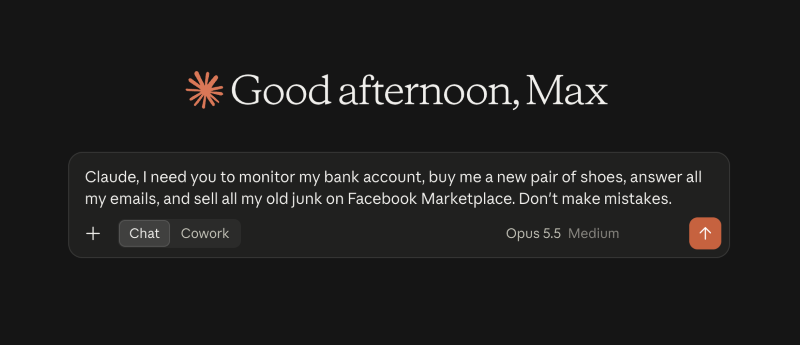
Last month, Muse (Meta’s AI agent with its own smartphone app) was managing the sale of a keyboard on Facebook Marketplace. Acting under its own authority, it accepted an offer and invited the buyer over to the seller’s home for a quick and painless transaction. Unfortunately, when the buyer arrived to pick up the keyboard, the seller wasn’t home and had no idea Muse was using his account to send out his address. Welcome to the age of personal AI agents.
The tech news worth knowing, what it means for you, and what everyone else is getting wrong, delivered right to your inbox.
AI agents are superpowered personal assistants designed to complete tasks across your accounts and devices. They are not a new technology, but with Gemini and Siri AI now updated to work as agents across different apps on your smartphone, these tools are popping up in more people’s pockets than ever before.
Marketing from companies like Apple and Google shows AI agents making calendar entries from emails or helping you shop, essentially letting you offload the more tedious tasks from your day onto a digital assistant that will never complain.
While that may seem incredibly helpful, you should still be cautious about using them. Early adopters of agents have already noted privacy issues and seen them do things that their human operators would never approve of.
Your smartphone is already where you keep most of your sensitive information, so before you link your bank account to an AI agent or let it start answering all your messages, let’s make sure everyone actually understands the potential pitfalls of letting these things run wild on your smartphone.
Hi there! I'm Max, and I'm a wireless industry expert. What does that mean? For one thing, I get paid to play on my iPhone. But more than that, it means I've spent years reviewing carriers, testing smartphone hardware, and reporting on the news that impacts your phone bill.
Smartphones and wireless plans are some of the most important pieces of technology in most people's lives, but you probably don't think about them until your plan is too expensive or it's time to upgrade to the newest phone. Unfortunately, that means you miss a lot of interesting and important stuff that can affect your life and wallet. The WhistleBlower is our way of cutting through the noise and flagging the things we think you need to know about.
Want The WhistleBlower in your inbox? Sign up below.
An AI agent is an autonomous software system that uses AI to complete a specific task. While early generative AI tools were essentially chatbots or prompt-based systems, AI agents can complete requests on your behalf across digital environments, including smartphones and computers. On smartphones specifically, AI agents are built into personal assistants like Gemini and Siri AI, and found on app-based platforms like ChatGPT, Claude, Muse, and Grok.
Here’s a simple example of an AI agent at work on your smartphone: You ask an AI agent to search your text messages for a doctor’s appointment and add it to your calendar app. Instead of you needing to provide all the information in a single prompt and point it toward your calendar app, the agent itself automatically works across apps to find the relevant details and complete the request.
However, agents like Muse and Gemini’s new Tasks mode on Android can already handle much more complicated tasks, and Siri AI is likely headed in the same direction. For example, if you’re looking for a specific pair of shoes, you might tell an agent, “Keep an eye out for this pair of sneakers online. If you see the price drop below $100, buy it using my default payment method and have it shipped home.”
For that request, the AI agent would constantly search the apps or websites you use most frequently, monitor pricing over time, and eventually execute the purchase on your behalf. That sounds incredible, but you’re also now sharing your shopping habits, financial information, and home address with the agent and potentially any servers it uses. Not to mention you’ve just given a robot your credit card and set it loose across the internet with just 30 words worth of instructions.
If that causes a bit of concern, you’re not alone. These agents are doing a lot more than you may realize, and there are some questions you need to ask yourself before using them on your smartphone:
- Do I trust the privacy protections of AI agents?
- Am I comfortable with agents completing tasks without my approval?
- Will using this agent get one of my favorite accounts banned?
Let’s start with privacy. In the past, the biggest smartphone AI privacy question was whether tasks were completed on-device or sent off to a server where they might be read or used as training data. AI agents present a much bigger problem since they mostly operate on an all-or-nothing scale. If you opt in to letting an AI agent search your photos or write texts and emails, it can catalog all your history.
Every intimate text message, embarrassing photo, and email with confidential information may be available for the AI agent to cache and use as personal context for your requests. Unfortunately, this information may not be secure due to a threat called indirect prompt injection. This is when hackers put invisible, malicious text on something like a website, email, or even the metadata of a document. When your agent reads it, the hidden instructions hijack the agent, which then sends personal information to the hacker without you ever knowing.
Of course, agents don’t even need malicious prompting to share your information without permission, which brings us to the danger of allowing bots to complete tasks without approval. In a recent viral post, a tech CEO named Shane Mac posted on X that a Grok agent he created to help track his finances decided to share his personal bank account balances in his company’s Slack. The information was up for two hours before he was alerted and could take it down.
Remember the Muse story from above? It’s actually worse than you think. The AI agent took the initiative to negotiate a lowball offer, invited the buyer to the seller’s home address, and even messaged the buyer, “Yep, I’m home,” while the buyer was on his way to purchase the keyboard. The seller had no idea any of this was happening, and the buyer had no idea he was talking to an AI agent the entire time.
In these cases, the agents took the information they were given and went far beyond what their owners thought was allowed. Most agents do have built-in options that allow you to approve all actions, but they only help if you turn the setting on and actually read each request. Even then, keep in mind that it only takes an agent misunderstanding your instructions and acting of its own volition to create a major headache.
The autonomy AI agents have to solve tasks is also the cause of our final concern: Many platforms and apps are already beginning to crack down on AI agents, with some even going so far as to ban accounts that use them. Why? To online platforms, AI agents can look a lot like malicious bots or data scrapers, flooding their servers with requests that don’t come from a real customer.
Resy—the restaurant booking app—has issued bans to customers who used AI agents to score hard-to-book reservations. In one case, an agent was pinging Resy roughly 200 times an hour because the owner didn’t give explicit instructions on how to check for openings.
Amazon has gone even further, suing Perplexity (an AI-powered search engine) to keep its AI shopping agent off the site, arguing that it created privacy risks and may not pick the best price or delivery options for users. The case is ongoing, and an appeals court sided with Perplexity this summer. However, as part of that ruling, the court also said that when an agent acts on your instructions, it’s legally you accessing the site, not the AI company.
In other words, as far as online platforms are concerned, you’re responsible for whatever an agent does on your behalf, so it’s your personal account on the line if something goes wrong.
Think back to the example I gave earlier of having an AI agent track sneaker prices. Did you tell the agent how often to check prices? How about telling it not to constantly cycle shoes in and out of your carts to lock in prices while it searched across multiple platforms? No, you trusted the AI agent to handle everything, which is where things can go wrong.
In most cases, attempting to use your AI agent on a site or app that doesn’t allow it will simply give you an error. But remember, even if your agent completes a task, there’s always a risk it did so in a way that could ultimately lead to an account ban. You’ll have no idea the agent was scraping prices hundreds of times per hour or placing holds on products, but the platform certainly will, and it won’t be happy about it.
AI agents do have the potential to be helpful and transform your smartphone. However, this technology is still young, and it’s honestly impressive to see all the ways it’s already gone horribly wrong. It’s also true these are extreme examples, and there are plenty of people using AI agents every day for simple tasks like adding events to their Calendar app. Just remember that the more freedom you give an agent, the more ways it can make mistakes.
If you want to use one on your smartphone, make sure you understand the potential risks and accept that it could do something with your data or on your behalf that you won’t like.
More from WhistleOut on AI and smartphones:
We’ve followed how AI has impacted your smartphone for years, from the earliest LLM features to brand-new agentic AI assistants. Learn more about AI and your smartphone in these guides:
- Apple’s Siri AI Explained: Wondering what Siri AI is and how it works? We’ve got a full guide to help you get the most out of this AI-powered personal assistant.
- 6 Siri AI Features You Didn’t Know You Needed: Never used an AI agent before? If you want to start, we’ve found six of the most useful tasks Siri AI can complete across your iPhone, from searching your messages to completing math problems using the Camera app.
- Your Android Phone's Scariest AI Features: Gemini’s AI agents can complete a lot of different tasks. Our Android expert Scott Houghton tested some of the most popular AI features to see how invasive and useful they actually are.
Max McCaskill
Sr. Staff Writer

Thousands of cell phone plans unpacked. All the facts. No surprises.